Who leads the conversation
Narratives
- Government
- 45%
- Left / opposition
- 25%
- The street
- 30%
Start free with El Resumen Esencial or go Premium for the full analysis. Newsletters are in Spanish.
Start free with El Resumen Esencial or go Premium for the full analysis. Newsletters are in Spanish.
Real pulse on X
The voices and keywords are in Spanish, as they appear in the sources.
Data gathered from public conversations and estimated by AI. Source: the story's context (no usable data from X).
El Cronista3 min read
AI estimate · 75% confidence
Main framing
Center 40%
Unclear · estimated by AI · 75% confidence
The estimate comes from analyzing the story's text: which sources it quotes, which facts it highlights and what language it uses.
An AI model reads the story and estimates how much of its framing leans left, center or toward a libertarian view. The three percentages add up to 100.
This is an AI-generated estimate, not an objective judgment.
Generated on · 1 min read
AI summaries may contain errors.
The article focuses on the investment and technological innovation of the new ferry without taking a clear political stance. Quotes from authorities and executives are presented neutrally, without emphasis on specific ideologies.
Quoted from the original Spanish text.
AI summary
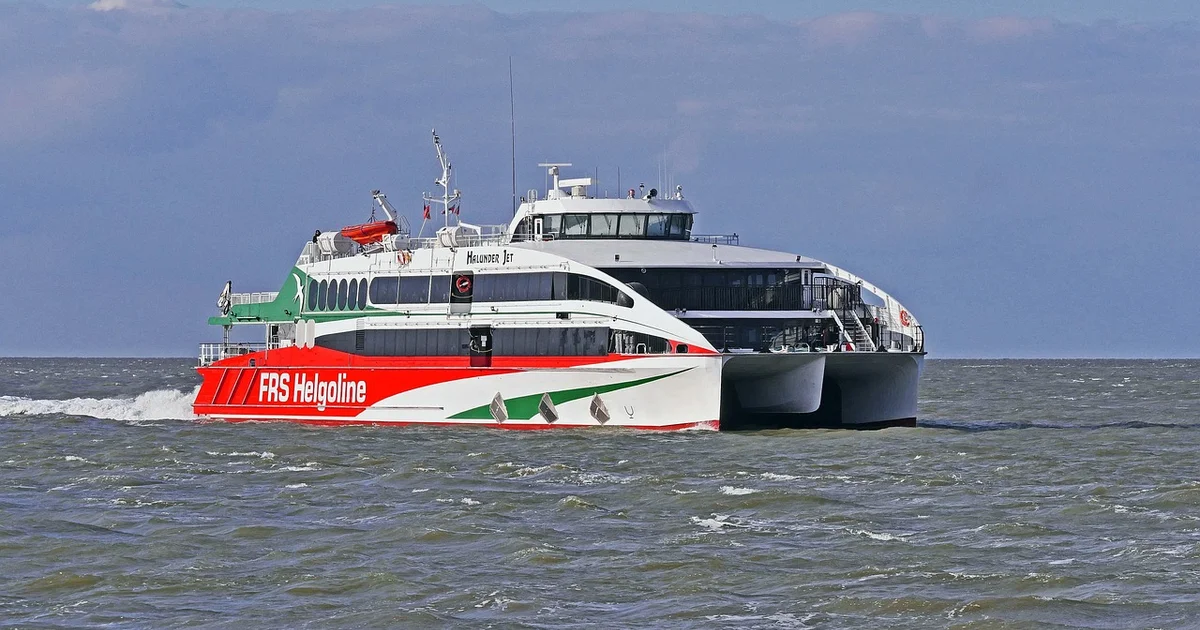
The 'China Zorrilla', the world's largest 100% electric ferry, has begun operating on the Buenos Aires to Colonia del Sacramento route. This construction project, which required a total investment of 190 million dollars, can transport up to 2,100 passengers and 225 vehicles per trip, significantly enhancing capacity compared to the previous vessel.
The ship features an electric propulsion system and extensive facilities, including a 2,300 m² Duty Free area.
Generated by AI from the original story in Spanish.
Un ferry eléctrico con 40 MWh de baterías
Un free shop de 2300 m2 y más de 3000 m2 de espacios para pasajeros
La ruta entre Buenos Aires y Colonia del Sacramento suma un nuevo protagonista: el China Zorrilla -considerado el buque 100% eléctrico más grande del mundo- comenzó este jueves 22 de octubre sus operaciones con capacidad para transportar hasta 2100 pasajeros y 225 vehículos por viaje.
El proyecto demandó una inversión de u$s 180 millones para su construcción, a los que se sumaron otros u$s 10 millones para su traslado hasta el Cono Sur.
Construido por el astillero australiano Incat Tasmania, el nuevo buque casi duplica la capacidad del Francisco, la embarcación insignia que Buquebus incorporó en 2013 y que, en su momento, marcó un hito por ser impulsada a gas natural licuado (GNL).
La presentación reunió a más de 500 invitados, entre ellos autoridades argentinas y uruguayas, empresarios y representantes de las compañías que participaron del desarrollo.
Original excerpt in Spanish. The content belongs to El Cronista.
Technology · La Nación