Three plans: El Resumen Esencial for free, Premium with the full analysis and Intelligence with data and alerts to decide, in English, Spanish or Portuguese.
Three plans: El Resumen Esencial for free, Premium with the full analysis and Intelligence with data and alerts to decide, in English, Spanish or Portuguese.
Three plans: El Resumen Esencial for free, Premium with the full analysis and Intelligence with data and alerts to decide, in English, Spanish or Portuguese.
One topic in one place: the official text, the video, what happened on X, how each outlet told it and the full speech.
Full speech · Institutional
Casa Rosada11 min read
AI estimate · 90% confidence
Main framing
Right 90%
Right · estimated by AI · 90% confidence
The estimate comes from analyzing the story's text: which sources it quotes, which facts it highlights and what language it uses.
An AI model reads the story and estimates how much of its framing leans left, center or toward a libertarian view. The three percentages add up to 100.
This is an AI-generated estimate, not an objective judgment.
Generated on · 1 min read
AI summaries may contain errors.
The speech takes a firmly critical stance towards the 2030 Agenda and collectivist policies, attributing the problems of many countries to these ideologies. Furthermore, Milei promotes individual freedom and property, positioning himself as a defender of a liberal economic and political model, which aligns with a right framing.
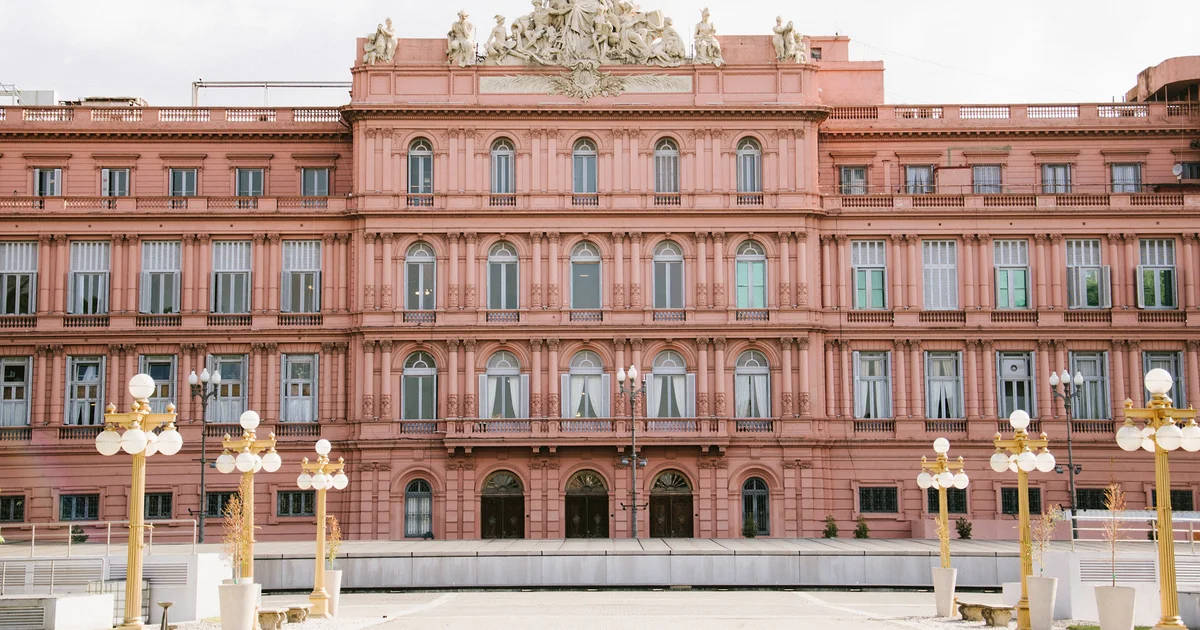
Institutional · Casa Rosada
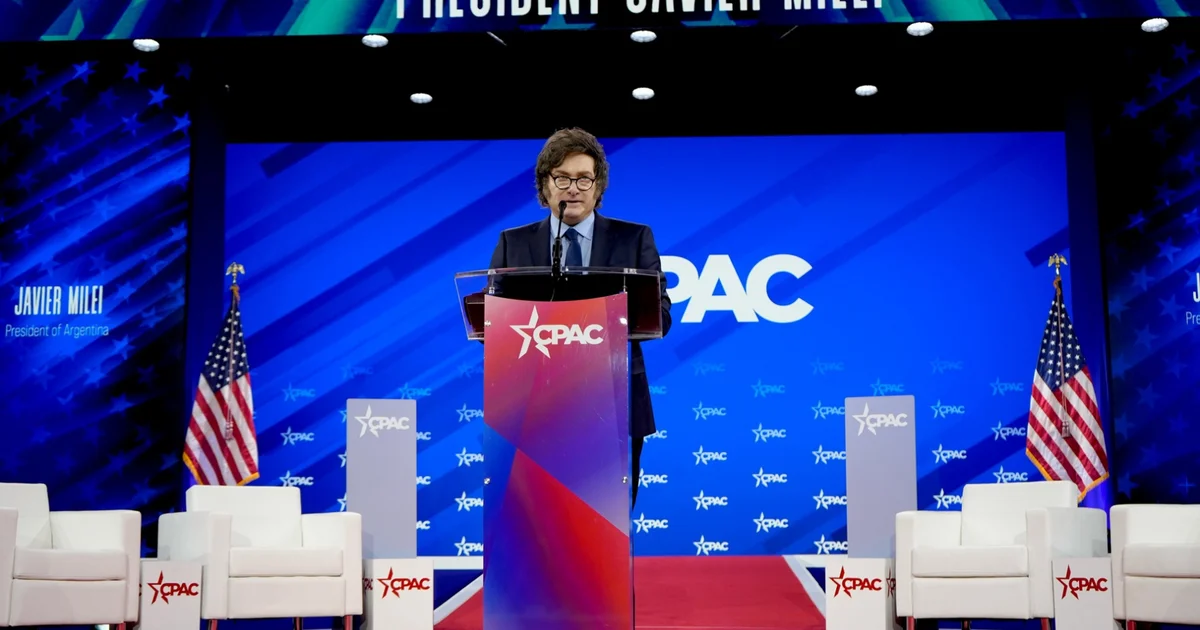
Institutional · Casa Rosada
Source: Casa Rosada (CC BY 2.5 AR). Translation by MileiHoy
Words of the President of the Nation Javier Milei, in the general debate of the 79th Session of the United Nations General Assembly, New York, United States.
To the authorities of the United Nations, to the representatives of the different countries that make it up and to all the citizens of the world who are watching us, good afternoon: for those who do not know, I am not a politician, I am an economist, a libertarian liberal economist, who never had the ambition to engage in politics and who has been honored with the position of president of the Republic of Argentina, in the face of the spectacular failure of more than a century of collectivist policies that destroyed our country.
This is my first speech - in front of the United Nations General Assembly - and I want to take the opportunity to - with humility - alert the different nations of the world about the path they have been following for decades, and about the danger implied by this organization failing to fulfill its original mission.
I do not come here to tell the world what it should do; I come here to tell the world, on the one hand, what will happen if the United Nations continues to promote the collectivist policies that it has been advocating under the mandate of the 2030 agenda, and, on the other hand, what values the new Argentina defends. I do want to start by giving credit where credit is due. The United Nations organization was born from the horror of the bloodiest war in global history with the main objective of ensuring that it would never happen again. To that end, the organization engraved its fundamental principles in stone in the Universal Declaration of Human Rights. There a basic agreement was recorded, around a maxim: that all human beings are born free and equal, in dignity and rights.
Under the auspices of this organization and the adoption of these ideas - over the last 70 years - humanity has experienced the longest period of global peace in history, which also coincided with the period of greatest economic growth in history. An international forum was created, where nations could resolve their conflicts through cooperation, instead of instantly resorting to arms, and something unthinkable was achieved: the five largest powers in the world seated permanently at the same table; each with the same veto power, despite having totally opposing interests.
All this did not make the scourge of war disappear, but it has managed - for now - to prevent any conflict from escalating to global proportions. The result was that we went from having two world wars in less than 40 years, which together claimed more than 120 million lives, to having 70 consecutive years of relative peace and global stability, under the mantle of an order that allowed the entire world to integrate commercially, compete, and prosper. Because where trade enters, bullets do not enter - said Bastiat - because trade guarantees peace, freedom guarantees trade, and equality before the law guarantees freedom.
In short, what was stated by the Prophet Isaiah has been fulfilled and is read in the park across the street: 'God will judge between the nations and will arbitrate for many peoples; they will forge their swords into plowshares and their spears into pruning hooks. Nation shall not lift up sword against nation; neither shall they learn war anymore.'
This is what has mostly occurred under the auspices of the United Nations, in its early decades, and for that reason, from this perspective, we are talking about a remarkable success in the history of nations that cannot be overlooked. However - at some point - as usually happens with most bureaucratic structures that we humans create, this organization ceased to uphold the principles outlined in its founding declaration and began to mutate.
An organization that had been conceived - essentially - as a shield to protect the Kingdom of Men transformed into a multi-tentacled Leviathan, which aims to decide not only what each nation-state should do but also how all citizens of the world should live. This is how we moved from an organization that pursued peace to an organization that imposes an ideological agenda on its members, on a myriad of issues that pertain to life in society.
The model of the United Nations, which had been successful, whose origin we can trace to the ideas of President Wilson, who spoke of a "peace society without victory" and was based on the cooperation of nation-states, has been abandoned; it has been replaced by a model of supranational government of international bureaucrats who seek to impose a certain way of life on the citizens of the world. What is being discussed - this week, here in New York, at the Summit of the Future - is nothing less than the deepening of that tragic course that this institution has adopted. Thus, the deepening of a model that - in the words of the United Nations Secretary-General himself - demands defining a new social contract on a global scale, doubling down on the commitments of the 2030 Agenda.
I want to be clear about the position of the Argentine agenda: the 2030 Agenda, although well-intentioned in its goals, is nothing other than a supranational socialist government program that seeks to solve modernity's problems with solutions that violate the sovereignty of nation-states and infringe upon the right to life, freedom, and property of individuals. It is an agenda that aims to resolve poverty, inequality, and discrimination with legislation that only deepens them. Because the history of the world demonstrates that the only way to guarantee prosperity is by limiting the power of the monarch, guaranteeing equality before the law, and defending the right to life, liberty, and property of individuals.
It has been precisely the adoption of this agenda, which obeys privileged interests; the abandonment of the principles - outlined in the Universal Declaration of Human Rights of the United Nations - that has distorted the role of this institution and placed it on a wrong path. Thus, we have seen how an organization, which was born to defend human rights, has become one of the main promoters of the systematic violation of freedom, as - for example - with the global lockdowns during the year 2020, which should be considered a crime against humanity.
In this very house that claims to defend human rights, they have allowed the entry, to the Human Rights Council, of bloody dictatorships like those of Cuba and Venezuela, with not the slightest reproach. In this very house that claims to defend women's rights, they allow the entry, to the Committee on the Elimination of Discrimination against Women, of countries that punish their women for showing their skin. In this very house - systematically - votes have been against the State of Israel, which is the only country in the Middle East that defends liberal democracy, while simultaneously demonstrating a total incapacity to respond to the scourge of terrorism.
In the economic realm, collectivist policies have been promoted that threaten economic growth; violate property rights and hinder the natural economic process, even preventing the most disadvantaged countries in the world from freely enjoying their own resources to get ahead. Regulations and prohibitions pushed precisely by the countries that developed thanks to doing what they now condemn. Additionally, a toxic relationship has been promoted between global governance policies and international credit institutions, demanding that the most marginalized countries commit resources they do not have to programs they do not need, turning them into perpetual debtors to promote the agenda of global elites.
The tutelage of the World Economic Forum has not helped either, where ridiculous policies with Malthusian blinders - like the "Zero Emission" policies - are promoted, which harm primarily poor countries. The policies related to sexual and reproductive rights, when the birth rate of Western countries is plummeting, announcing a bleak future for all. The organization has also failed satisfactorily to fulfill its mission of defending the territorial sovereignty of its members, as we Argentinians know firsthand, in relation to the Malvinas Islands. And we have even reached a situation where - the Security Council - which is the most important body of this house, has been distorted because the veto of its permanent members has begun to be used, in defense of the particular interests of some.
So here we are today, with an impotent organization unable to provide solutions to the real global conflicts, such as the abhorrent Russian invasion of Ukraine, which has already cost the lives of more than 300,000 people, leaving over a million injured in the process. An organization that, instead of confronting these conflicts, invests time and effort in imposing on poor countries what, how, and with whom they should produce, what they must eat and what they should believe, as is intended in the present Pact for the Future. This long list of errors and contradictions has not been free of charge, but has resulted in the loss of credibility of the United Nations, before the citizens of the free world and the distortion of its functions.
Therefore, I want to issue a warning: we are at the end of a cycle. Collectivism and the moral posturing of the woke agenda have clashed with reality and no longer have credible solutions to offer to the real problems of the world. In fact, they never did. If the 2030 Agenda has failed - as its own promoters recognize - the response should be to ask ourselves if it was not a poorly conceived program from the start, accept that reality and change course. One cannot pretend to persist in error by doubling down on an agenda that has already failed. It always happens the same with ideas coming from the left: they design a model according to what humans should be - according to them - and when individuals - freely - act differently, they have no better solution than to restrict, repress, and curtail their freedom.
We - in Argentina - have already seen with our own eyes what lies at the end of this path of envy and sad passions: poverty, degradation, anarchy, and a fatal absence of freedom. We are still in time to move away from that course.
I want to be clear about something so there are no misunderstandings: Argentina, which is currently undergoing a profound process of change, has decided to embrace the ideas of freedom; those ideas that say that all citizens are born free and equal before the law, that we have inalienable rights granted by the Creator, among which are the rights to life, liberty, and property. Those principles, which order the process of change we are carrying out in Argentina, are also the principles that will guide our international conduct from now on.
We believe in the defense of the life of all; we believe in the defense of the property of all; we believe in the freedom of expression for all; we believe in the freedom of worship for all; we believe in the freedom of trade for all, and we believe in limited governments, all of them.
And just as what happens in one country quickly impacts others in these times, we believe that all peoples must live free from tyranny and oppression, whether that takes the form of political oppression, economic slavery, or religious fanaticism. This fundamental idea must not remain mere words; it must be supported by actions, diplomatically, economically, and materially, through the combined strength of all countries that defend freedom.
This doctrine of the new Argentina is nothing less than the true essence of the United Nations, that is, the cooperation of the United Nations in defense of freedom. If the United Nations decides to resume the principles that gave it life and adapt once again the role for which it was conceived, count on the unwavering support of Argentina in the fight for freedom.
Know also that Argentina will not support any policy that implies the restriction of individual freedoms, of commerce, or the violation of the natural rights of individuals, no matter who promotes it or how much consensus that institution has. For this reason, we want to officially express our dissent regarding the Pact of the Future, signed on Sunday, and we invite all free nations of the world to join us, not only in the dissent of this pact but in the creation of a new agenda for this noble institution: the agenda of freedom.
Starting today, know that the Argentine Republic will abandon the historical position of neutrality that has characterized us and will be at the forefront of the fight in defense of freedom. Because—as Thomas Paine said—"those who wish to reap the blessings of freedom must—like men—bear the fatigue of defending it."
May God bless the Argentines and all citizens of the world, and may the forces of heaven accompany us.
Viva la libertad, carajo! (Long live freedom, damn it!). Thank you very much.
Palabras del Presidente de la Nación Javier Milei, en el debate general, del 79 Período de Sesiones, de la Asamblea General de Naciones Unidas, Nueva York, Estados Unidos
A las autoridades de la Naciones Unidas, a los representantes de los distintos países que le integran y a todos los ciudadanos del mundo que nos estén mirando, buenas tardes: para aquellos que no lo saben, yo no soy político, soy un economista, un economista liberal libertario, que jamás tuvo la ambición de hacer política y que fue honrado, con el cargo de presidente de la República Argentina, frente al fracaso estrepitoso, de más de un siglo de políticas colectivistas, que destruyeron nuestro país.
Este es mi primer discurso - frente a la Asamblea General de las Naciones Unidas - y quiero aprovechar para - con humildad - alertar a las distintas naciones del mundo sobre el camino que están transitando, hace décadas, y sobre el peligro que implica que esta organización fracase en cumplir su misión original.
No vengo aquí a decirle al mundo lo que tiene que hacer; vengo aquí a decirle al mundo, por un lado, lo que va a ocurrir si las Naciones Unidas continúan promoviendo las políticas colectivistas, que vienen promoviendo bajo el mandato de la agenda 2030, y, por el otro, cuáles son los valores que la nueva Argentina defiende. Quiero sí comenzar dando crédito, cuando el crédito corresponde. La organización de Naciones Unidas nace del horror de la guerra más cruenta de la historia global con el objetivo principal de que nunca volviera a ocurrir. Para eso la organización grabó en piedra sus principios fundamentales, en la Declaración Universal de Derechos Humanos. Ahí se consignó un acuerdo básico, en torno a una máxima: que todos los seres humanos nacen libres e iguales, en dignidad y derechos.
Bajo la tutela de esta organización y la adopción de estas ideas - durante los últimos 70 años - la humanidad vivió el período de paz global, más largo de la historia, que coincidió – también - con el período de mayor crecimiento económico de la historia. Se creó un foro internacional, donde las naciones pudieran dirimir sus conflictos, a través de la cooperación, en vez de recurrir – instantáneamente - a las armas y se logró algo impensado: sentar de manera permanente a las cinco potencias más grandes del mundo, en una misma mesa; cada una con el mismo poder de veto, a pesar de tener intereses totalmente contrapuestos.
Todo esto no hizo que el flagelo de la guerra desapareciera, pero se logró - por ahora - que ningún conflicto escalara a proporciones mundiales. El resultado fue que pasamos de tener dos guerras mundiales, en menos de 40 años, que - en conjunto - se cobraron más de 120 millones de vidas, a tener 70 años consecutivos de relativa paz y estabilidad global, bajo el manto de un orden que permitió al mundo entero integrarse comercialmente, competir y prosperar. Porque donde entra el comercio, no entran las balas - decía Bastiat - porque el comercio garantiza la paz, la libertad garantiza el comercio y la igualdad ante la ley garantiza la libertad.
Se cumplió, en definitiva, lo que consignó el Profeta Isaías y se lee en el parque, cruzando la calle: "Dios juzgará entre las naciones y arbitrará por los muchos pueblos; forjarán sus espadas en rejas de arado y sus lanzas en podadoras. Nación no tomará espada contra Nación; nunca más conocerán la guerra".
Esto es lo que ha ocurrido – mayormente - bajo la tutela de las Naciones Unidas, en sus primeras décadas, y por eso, desde esta perspectiva, estamos hablando de un éxito destacable, en la historia de las naciones que no puede ser soslayado. Ahora bien - en algún momento - y como suele ocurrir con la mayoría de las estructuras burocráticas que los hombres creamos, esta organización dejó de velar por los principios esbozados en su declaración fundante y comenzó a mutar.
Una organización que había sido pensada – esencialmente - como un escudo para proteger el Reino de los Hombres se transformó en un Leviatán de múltiples tentáculos, que pretende decidir no sólo qué debe hacer cada Estado-Nación, sino también cómo deben vivir todos los ciudadanos del mundo. Así es como pasamos de una organización que perseguía la paz; a una organización que le impone una agenda ideológica a sus miembros, sobre un sinfín de temas, que hacen a la vida del hombre en sociedad.
El modelo de Naciones Unidas, que había sido exitoso, cuyo origen podemos rastrear, en las ideas del presidente Wilson, que hablaba de la "sociedad de paz sin victoria" y que se fundaba en la cooperación de los Estados nación, ha sido abandonado; ha sido reemplazado por un modelo de gobierno supranacional de burócratas internacionales, que pretenden imponerles a los ciudadanos del mundo un modo de vida determinado. Lo que se está discutiendo - esta semana, aquí, en Nueva York, en la Cumbre del Futuro - no es otra cosa que la profundización de ese rumbo trágico que esta institución ha adoptado. Así, la profundización de un modelo que - en palabras del propio secretario de las Naciones Unidas - exige definir un nuevo contrato social a escala global, redoblando los compromisos, de la Agenda 2030.
Quiero ser claro en la posición de la agenda argentina: la Agenda 2030, aunque bien intencionada en sus metas, no es otra cosa que un programa de gobierno supranacional, de corte socialista, que pretende resolver los problemas de la modernidad con soluciones que atentan contra la soberanía de los Estados Nación y violentan el derecho a la vida, la libertad y la propiedad de las personas. Es una agenda, que pretende solucionar la pobreza, la desigualdad y la discriminación con legislación que lo único que hace es profundizarlas. Porque la historia del mundo demuestra que la única manera de garantizar la prosperidad es limitando el poder del monarca, garantizando la igualdad ante la ley y defendiendo el derecho a la vida, la libertad y la propiedad de los individuos.
Ha sido precisamente la adopción de esa agenda, que obedece a intereses privilegiados; el abandono de los principios - esbozados en la Declaración Universal de Derechos Humanos de las Naciones Unidas - lo que tergiversó el rol de esta institución y la puso en una senda equivocada. Así, hemos visto cómo una organización, que nació para defender los derechos del hombre, ha sido una de las principales propulsoras de la violación sistemática de la libertad, como - por ejemplo - con las cuarentenas a nivel global durante el año 2020, que deberían ser consideradas un delito de lesa humanidad.
En esta misma casa que dice defender los derechos humanos, han permitido el ingreso, al Consejo de Derechos Humanos, a dictaduras sangrientas como la de Cuba y Venezuela, sin el más mínimo reproche. En esta misma casa que dice defender los derechos de las mujeres, permiten el ingreso, al Comité para la Eliminación de la Discriminación contra la Mujer, a países que castigan a sus mujeres por mostrar la piel. En esta misma casa – sistemáticamente - se ha votado en contra del Estado de Israel, que es el único país de Medio Oriente, que defiende la democracia liberal, mientras se ha demostrado - en simultáneo - una incapacidad total de responder al flagelo del terrorismo.
En el plano económico, se han promovido políticas colectivistas que atentan contra el crecimiento económico; violentan los derechos de propiedad y entorpecen el proceso económico natural, llegando a impedirle a los países más postergados del mundo gozar libremente de sus propios recursos para salir adelante. Regulaciones y prohibiciones impulsadas precisamente por los países que se desarrollaron, gracias a hacer lo mismo que hoy condenan. Se ha promovido, además, una relación tóxica entre las políticas de gobernanza global y los organismos de crédito internacional, exigiéndole a los países más relegados que comprometan recursos que no tienen en programas que no necesitan, convirtiéndolos en deudores perpetuos para promover la agenda de las elites globales.
Tampoco ha ayudado el tutelaje del Foro Económico Mundial, donde se promueven políticas ridículas con anteojeras maltusianas - como las políticas de "Emisión Cero" - que dañan, sobre todo, a los países pobres. A las políticas vinculadas a los derechos sexuales y reproductivos, cuando la tasa de natalidad de los países occidentales se está desplomando, anunciando un futuro sombrío para todos. Tampoco la organización ha cumplido satisfactoriamente su misión de defender la soberanía territorial de sus integrantes, como sabemos los argentinos de primera mano, en la relación con las Islas Malvinas. Y llegamos, incluso, a una situación en la que - el Consejo de Seguridad - que es el órgano más importante de esta casa, se ha desnaturalizado, porque el veto de sus integrantes permanentes se ha empezado a utilizar, en defensa de los intereses particulares de algunos.
Así estamos hoy, con una organización impotente en brindar soluciones a los verdaderos conflictos globales, como ha sido la aberrante invasión rusa a Ucrania, que ya le ha costado la vida a más de 300.000 personas, dejando un tendal de más de un millón de heridos en el proceso. Una organización que, en vez de enfrentar estos conflictos, invierte tiempo y esfuerzo en imponerle a los países pobres qué, cómo y deben producir, con quién vincularse, qué deben comer y en qué creer, como pretende dictar el presente Pacto del Futuro. Toda esta larga lista de errores y contradicciones no ha sido gratuita, sino que ha redundado en la pérdida de credibilidad, de las Naciones Unidas, ante los ciudadanos del mundo libre y en la desnaturalización de sus funciones.
Por eso, quiero hacer una advertencia: estamos ante un fin de ciclo. El colectivismo y el postureo moral, de la agenda woke, se han chocado con la realidad y ya no tienen soluciones creíbles para ofrecer a los problemas reales del mundo. De hecho, nunca las tuvieron. Si la Agenda 2030 fracasó - como reconocen sus propios promotores - la respuesta debería ser preguntarnos si no fue un programa mal concebido de inicio, aceptar esa realidad y cambiar el rumbo. No se puede pretender persistir en el error redoblando la apuesta de una agenda que ha fracasado. Siempre ocurre lo mismo con las ideas que vienen de la izquierda: diseñan un modelo acorde a lo que el ser humano debería ser - según ellos - y cuando los individuos – libremente - actúan de otra manera, no tienen mejor solución que restringir, reprimir y coartar su libertad.
Nosotros - en Argentina - ya hemos visto con nuestros propios ojos lo que hay al final de este camino de envidia y pasiones tristes: pobreza, embrutecimiento, anarquía y una ausencia fatal de libertad. Todavía estamos a tiempo de apartarnos de ese rumbo.
Quiero ser claro con algo para que no haya malas interpretaciones: la Argentina, que está viviendo un proceso profundo de cambio, en la actualidad, ha decidido abrazar las ideas de la libertad; esas ideas que dicen que todos los ciudadanos nacemos libres e iguales ante la ley, que tenemos derechos inalienables otorgados por el Creador, entre los que se encuentran el derecho a la vida, la libertad y la propiedad. Esos principios, que ordenan el proceso de cambio, que estamos llevando adelante, en la Argentina, son también los principios que guiarán nuestra conducta internacional, a partir de ahora.
Creemos en la defensa de la vida de todos; creemos en la defensa de la propiedad de todos; creemos en la libertad de expresión para todos; creemos en la libertad de culto para todos; creemos en la libertad de comercio para todos y creemos en los gobiernos limitados, todos ellos.
Y como en estos tiempos lo que sucede en un país impacta rápidamente en otros, creemos que todos los pueblos deben vivir libres de la tiranía y la opresión, ya sea que tome forma de opresión política, de esclavitud económica o de fanatismo religioso. Esa idea fundamental no debe quedarse en meras palabras; tiene que ser apoyada en los hechos, diplomáticamente, económicamente y materialmente, a través de la fuerza conjunta de todos los países, que defendemos la libertad.
Esta doctrina de la nueva Argentina no es - más ni menos - que la verdadera esencia de la Organización de las Naciones Unidas, es decir, la cooperación de Naciones Unidas en defensa de la libertad. Si las Naciones Unidas deciden retomar los principios que le dieron vida y volver a adaptar el rol para el que fue concebida, cuenten con el apoyo – inclaudicable - de la Argentina, en la lucha por la libertad.
Sepan, también, que la Argentina no acompañará ninguna política que implique la restricción de las libertades individuales, del comercio, ni la violación de los derechos naturales de los individuos, no importa quién la promueva ni cuánto consenso tenga esa institución. Por esta razón, queremos expresar – oficialmente - nuestro disenso sobre el Pacto del Futuro, firmado el día domingo, e invitamos a todas las naciones del mundo libre a que nos acompañen, no sólo en el disenso de este pacto, sino en la creación de una nueva agenda para esta noble institución: la agenda de la libertad.
A partir de este día, sepan que, la República Argentina, va a abandonar la posición de neutralidad histórica que nos caracterizó y va a estar a la vanguardia de la lucha en defensa de la libertad. Porque - como decía Thomas Paine - "aquellos que desean cosechar las bendiciones de la libertad deben - como hombres - soportar la fatiga de defenderla".
Que Dios bendiga a los argentinos y a todos los ciudadanos del mundo, y que las fuerzas del cielo nos acompañen.
¡Viva la libertad, carajo!. Muchas gracias.
Full original text in Spanish, published by Casa Rosada.
Copied verbatim from the official speech; translation by MileiHoy.