Who leads the conversation
Narratives
- Government
- 55%
- Left / opposition
- 25%
- The street
- 20%
Start free with El Resumen Esencial or go Premium for the full analysis, in English, Spanish or Portuguese.
Start free with El Resumen Esencial or go Premium for the full analysis, in English, Spanish or Portuguese.
Real pulse on X
The voices and keywords are in Spanish, as they appear in the sources.
Data gathered from public conversations and estimated by AI. Source: the story's context (no usable data from X).
Perfil8 min read
AI estimate · 80% confidence
Main framing
Left 50%
Left · estimated by AI · 80% confidence
The estimate comes from analyzing the story's text: which sources it quotes, which facts it highlights and what language it uses.
An AI model reads the story and estimates how much of its framing leans left, center or toward a libertarian view. The three percentages add up to 100.
This is an AI-generated estimate, not an objective judgment.
Generated on · 1 min read
AI summaries may contain errors.
The article presents a balanced approach by discussing the IMF's recommendations and the government's policies without favoring a specific political side. It mentions both support and warnings, reflecting a more neutral perspective.
Quoted from the original Spanish text.
AI summary
The IMF supported Javier Milei's government's policy of cutting energy subsidies and emphasized the need to preserve advancements in this area across Latin America. In its report, the organization highlighted that despite the international context of high energy prices, Argentina made progress in eliminating subsidies.
While an economic recovery is anticipated in 2027, the IMF warned of the need for structural reforms and improved job creation.
Generated by AI from the original story in Spanish.
El Fondo Monetario Internacional (FMI) volvió a respaldar la política de reducción de subsidios energéticos que lleva adelante el gobierno de Javier Milei y pidió a los países de América Latina preservar los avances logrados en esa materia, incluso en un contexto internacional marcado por el encarecimiento del petróleo y las presiones inflacionarias. En su nuevo informe sobre Perspectivas Económicas para el Hemisferio Occidental, el organismo mencionó expresamente a la Argentina entre las economías que avanzaron en la eliminación de ayudas estatales a la energía.
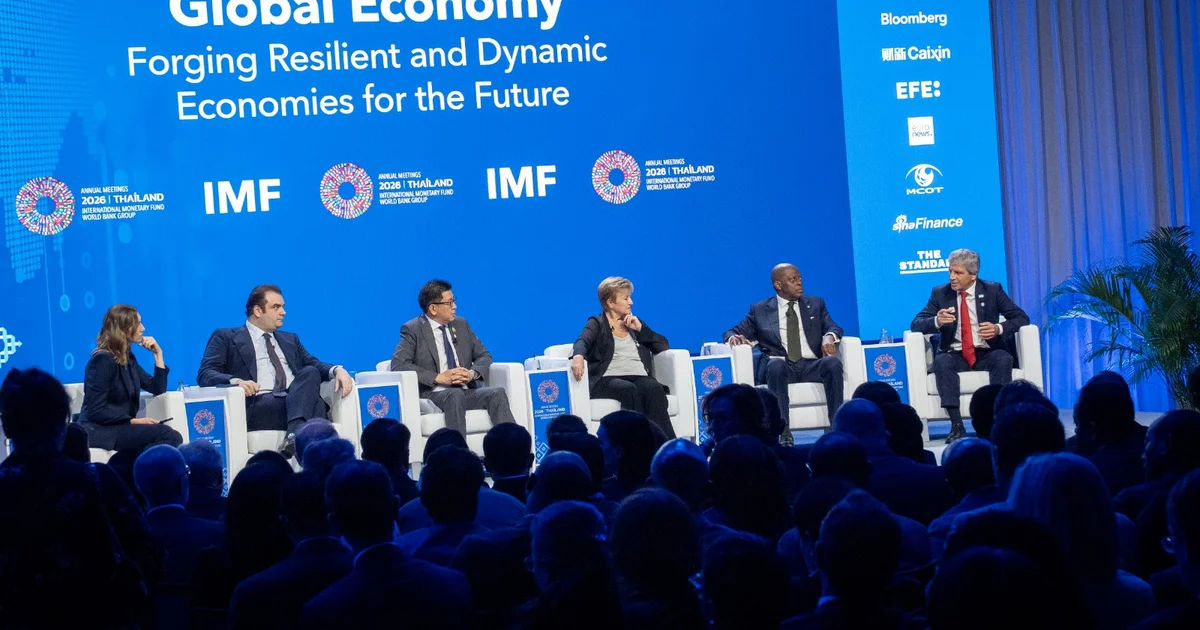
"Debe preservarse el difícilmente logrado avance alcanzado en varios países, incluidos Argentina, Bolivia y Ecuador, en cuanto a la reducción o eliminación de los subsidios a la energía", sostuvo el Fondo en el documento presentado durante la Asamblea Anual que se desarrolla en Bangkok, Tailandia.
Juan Pablo Valdés anunció tarifa eléctrica diferenciada, ratificó el rechazo a las PASO y viajará a las zonas inundadas
El planteo adquiere especial relevancia para la Argentina, donde la reducción del gasto en subsidios constituye uno de los pilares de la estrategia oficial para sostener el superávit fiscal, pero también implica una mayor exposición de las tarifas y los precios de los combustibles a las variaciones de los costos energéticos.
El organismo reconoció que durante 2026 numerosos gobiernos implementaron medidas para amortiguar el impacto del aumento de los precios internacionales de la energía sobre hogares y empresas. Entre ellas mencionó subsidios a los combustibles, reducciones impositivas, garantías crediticias y otras intervenciones destinadas a contener los costos.
Sin embargo, advirtió que estas herramientas, cuando se aplican de manera generalizada, terminan generando efectos contraproducentes. "Si bien estas medidas brindaron un alivio inmediato, las intervenciones no focalizadas generaron distorsiones y anularon señales de precios que, de otro modo, habrían reducido la demanda de energía", explicó el informe.
Original excerpt in Spanish. The content belongs to Perfil.