Who leads the conversation
Narratives
- Government
- 30%
- Left / opposition
- 40%
- The street
- 30%
Start free with El Resumen Esencial or go Premium for the full analysis. Newsletters are in Spanish.
Start free with El Resumen Esencial or go Premium for the full analysis. Newsletters are in Spanish.
Real pulse on X
The voices and keywords are in Spanish, as they appear in the sources.
Data gathered from public conversations and estimated by AI. Source: the story's context (no usable data from X).
Javier Milei, quoted by Página/121 min read
AI estimate · 80% confidence
Main framing
Left 60%
Mixed · estimated by AI · 80% confidence
The estimate comes from analyzing the story's text: which sources it quotes, which facts it highlights and what language it uses.
An AI model reads the story and estimates how much of its framing leans left, center or toward a libertarian view. The three percentages add up to 100.
This is an AI-generated estimate, not an objective judgment.
Generated on · 1 min read
AI summaries may contain errors.
The use of terms like 'adjustment' by Kicillof suggests a direct critique of Milei's management, while Milei's self-criticisms indicate a possible openness to acknowledging mistakes. The tension between the positions highlights the polarization in the economic debate.
Quoted from the original Spanish text.
AI summary
The debate on economic delinquency in Argentina intensifies following President Javier Milei's comments about poverty in the country. This context reveals the pressure on the government, while the opposition, represented by Axel Kicillof, criticizes the proposed budget, labeling it as an austerity measure.
The positions highlight the polarization of the economic discourse in the country, emphasizing citizens' concerns about the current fiscal management.
Generated by AI from the original story in Spanish.
El debate sobre la morosidad económica en Argentina tomó un nuevo giro tras las declaraciones del presidente Javier Milei sobre la pobreza en el país. Según @JMilei, "Argentina está sufriendo las consecuencias" de una crisis económica, en respuesta a las preocupaciones generadas por la encuesta de Zentrix, que reveló que dos de cada tres hogares se quedan sin ingresos antes del día 20 de cada mes. Estas afirmaciones se producen en un contexto de creciente tensión social y económica.
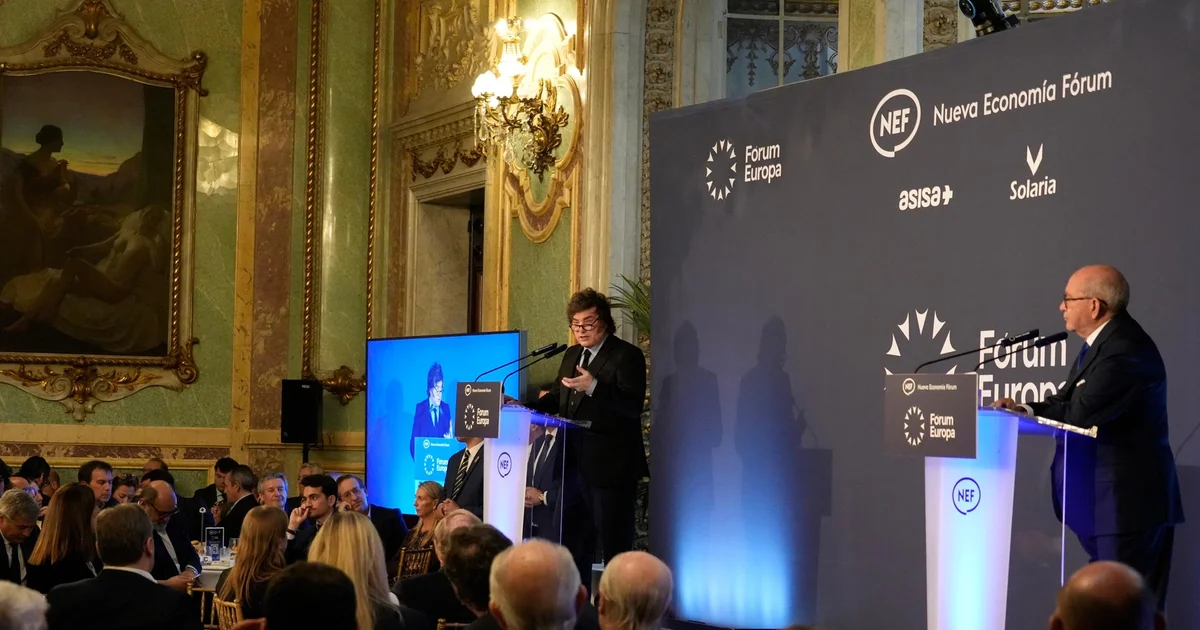
En una entrevista reciente con la prensa española, @JMilei también se mostró autocrítico y admitió que "seguro que hay cosas que las podríamos haber hecho mejor o calculado mejor". Estas declaraciones reflejan la presión que enfrenta el gobierno ante un panorama económico complicado y el descontento de la ciudadanía con la gestión actual.
Por su parte, el exministro de Economía, Axel Kicillof, hizo hincapié en la necesidad de oposición ante el presupuesto presentado por el gobierno. En su opinión, el mismo representa "un presupuesto de nuevo de ajuste, de contracción", lo que generará más desafíos para los gobernadores y legisladores en la búsqueda de un consenso. Kicillof destacó la importancia de coordinar esfuerzos entre distintas fuerzas políticas para enfrentar la situación.
Las posturas de ambos lados resaltan la polarización en el discurso económico. Mientras el gobierno se defiende y reconoce errores, la oposición critica la dirección del manejo fiscal y sus posibles consecuencias para la población en un escenario de crisise. Este debate, que aborda preocupaciones centrales para el futuro de Argentina, continúa desarrollándose en el ámbito político.
Original excerpt in Spanish. The content belongs to Javier Milei, quoted by Página/12.


Economy · Página/12