Three plans: El Resumen Esencial for free, Premium with the full analysis and Intelligence with data and alerts to decide, in English, Spanish or Portuguese.
Three plans: El Resumen Esencial for free, Premium with the full analysis and Intelligence with data and alerts to decide, in English, Spanish or Portuguese.
Three plans: El Resumen Esencial for free, Premium with the full analysis and Intelligence with data and alerts to decide, in English, Spanish or Portuguese.
One topic in one place: the official text, the video, what happened on X, how each outlet told it and the full speech.
Full speech · Institutional
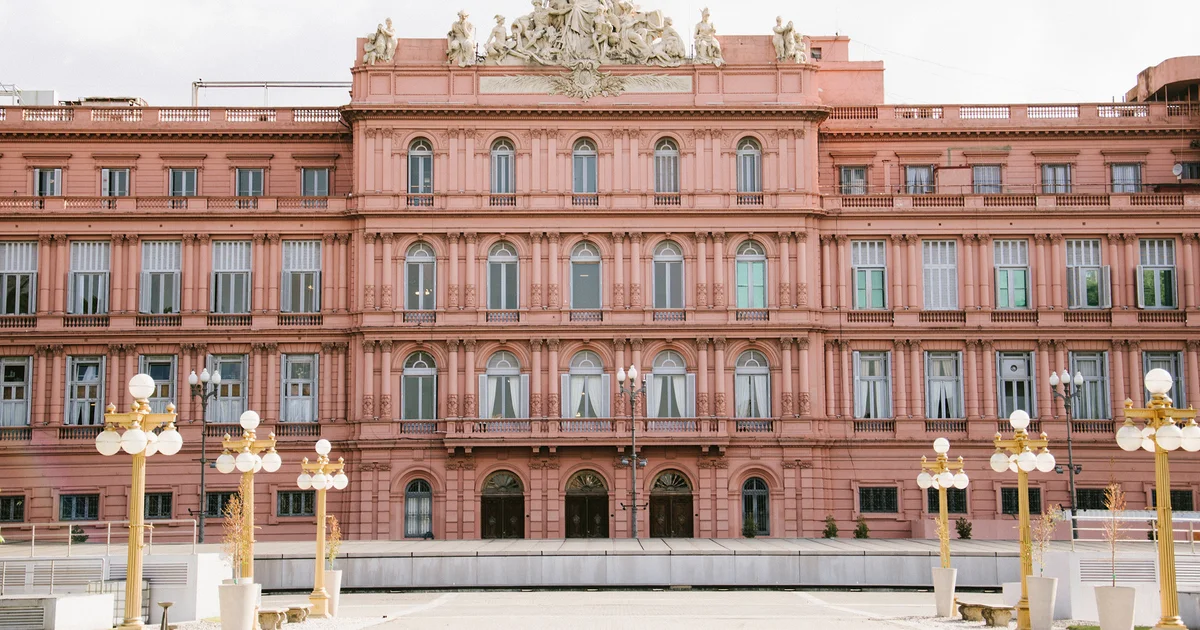
Casa Rosada28 min read
AI estimate · 90% confidence
Main framing
Right 90%
Right · estimated by AI · 90% confidence
The estimate comes from analyzing the story's text: which sources it quotes, which facts it highlights and what language it uses.
An AI model reads the story and estimates how much of its framing leans left, center or toward a libertarian view. The three percentages add up to 100.
This is an AI-generated estimate, not an objective judgment.
Generated on · 1 min read
AI summaries may contain errors.
Milei's speech strongly defended austerity policies and control of public spending, emphasizing the need for fiscal balance for the country's well-being, suggesting a right ideological framework. He also harshly criticized previous economic policies, highlighting his stance against excessive public spending.
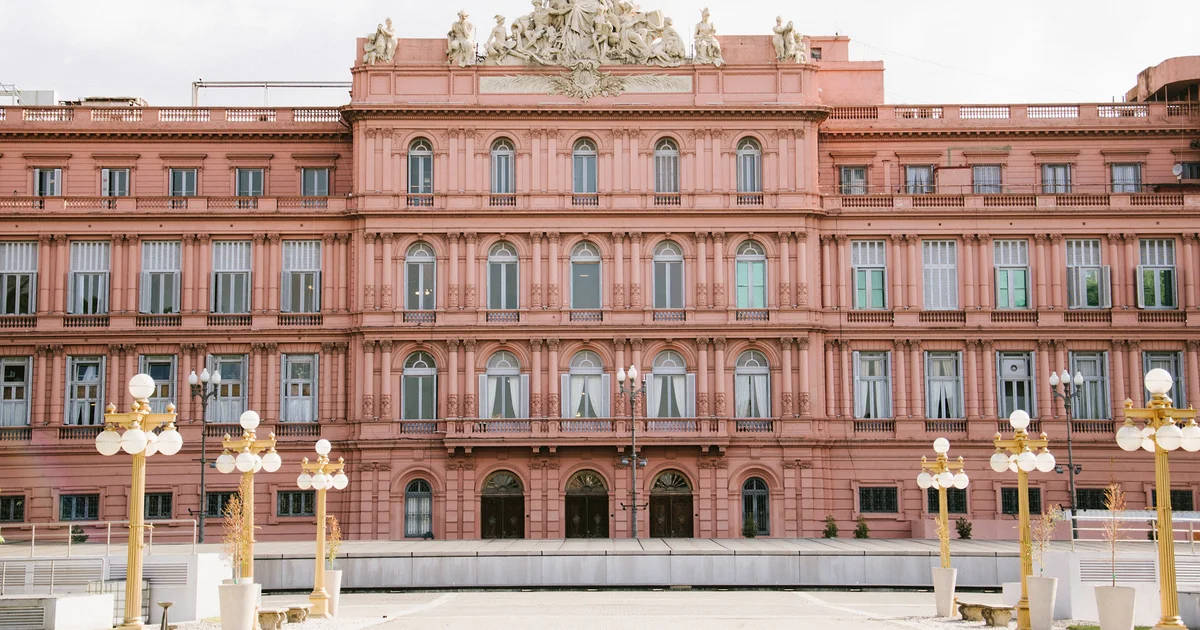
Institutional · Casa Rosada
Source: Casa Rosada (CC BY 2.5 AR). Translation by MileiHoy
National Address by the President of the Nation, Javier Milei, presenting the 2025 Budget at the Congress of the Nation.
Hello everyone. Members of the national government, members of the Budget Committee of the Honorable Congress of the Nation, deputies, senators, and leaders, both from La Libertad Avanza and the rest of the political spectrum who accompany me today, and all Argentines watching from their homes. Good evening.
Today we are here to present a national budget project that will forever change the history of our country, so that we can once again be the great Argentina we once were. After years of the political class putting shackles on individual freedoms, today we come here to put a shackle on the State.
This budget project we are presenting here today has a methodology that shields fiscal balance, regardless of what the economic scenario is. This means that, regardless of what happens to the economy on a macro level, the fiscal result of the national public sector will be balanced. This fiscal shield opens a new page in our history, previously unknown. From now on, Argentina will be solvent, with the consequent drop in country risk, interest rates, and consequently, the increase in investment, productivity, real wages, and ultimately, the decrease in poverty and indigence.
In fact, I can’t help but mention that we are here today, in this very house where in December 2001 it was declared and applauded, during the presidency of Adolfo Rodríguez Saá, to a full house and amid huge excitement, the default of Argentina. That default, which was celebrated and applauded by the entire political class, would mark the beginning of a populist cycle that has destroyed Argentina.
Some may wonder why I am here tonight, as it is generally the Minister of Economy who presents the national budget proposed by the Executive Power to Congress. I decided to do it personally for two reasons. First, because I am an economist. And I am proud of that.
I am the first economist president in Argentine history, to be more precise, and because I am an economist, probably due to professional deformation, I believe that the fate of a people is played out in the economic definitions they take, because only on the basis of a healthy economy can people truly exercise their freedom. Well, the first and foremost of these definitions is about what the State should be concerned with and how it will use the money from taxpayers. That, neither more nor less, is the national budget.
Let us remember that in some sense, modern democracy as we know it today is the offspring of a revolution that was born under the principle that there can be no taxation without representation. The main task of this honorable House, for what it was intended, is to establish a national budget to define what the State does with the money from taxpayers.
The second reason why I am presenting myself here today is because I come to propose a budget project that is diametrically different from what we are used to. Not only different but the most radically different in our history, and I have learned firsthand that the deeper the change, the greater the effort that must be made to fight for it. That is why we are here today, because the national budget is not just another law: it is the law of laws. It is the roadmap under which we will organize the priorities in our management at this national moment. The cornerstone of this budget is the first truth of a healthy public administration, a truth that has been relegated in Argentina for many years: zero deficit.
The first thing to understand is that when governments want to spend and compulsively spend and do not have the margin to raise taxes further, as happens in Argentina, the only way to pay the bill is by borrowing money or printing it at the Central Bank. Let us briefly recall what has been the historical methodology of our ruling class: since politicians do not understand the budget constraint and do not want to stop spending, they create a deficit.
To cover that deficit, the first thing they do is take on debt, but since they do not make the necessary adjustments, the debt becomes unpayable. And then, they default. That’s how we became the world's greatest serial defaulter. But default is not innocuous; falling into default produces what is already famous in Argentina: capital flight. So, dollars start to become scarce, and politicians have no better idea than to impose tariffs or export duties to seize dollars from the private sector.
On the other hand, they impose capital controls to try to retain the scarce dollars that the country generates. As this results in Argentina being without credit in financial markets, they have no better idea than to print money, which, as we already know, generates inflation. Footnote: because inflation is always and everywhere a monetary phenomenon, whether people like it or not.
To combat inflation, they put controls on prices, which we have known for 4000 years do not work, and invent regulations that destroy private property, hinder economic calculation, destroy capital, and consequently increase poverty and indigence. This is the sad Argentine story of what politicians and analysts call economic policy, which has been nothing more than the systematic violation of citizens' property rights in Argentina.
In other words, the deficit is only covered by debt, which is nothing more than future taxes—taxes on future generations—or with more present taxes or money printing. There can be no more taxes in Argentina; it is the country with the highest number of taxes in the world. And if we add that 50% of economic activity is informal, the formal tax pressure in Argentina hovers around 60%. A true absurdity for a country that desperately needs to accumulate capital.
Once the possibility of raising taxes is ruled out, the other way to cover the deficit is with debt, that is, loading today’s waste onto future generations. This is nothing less than delivering the lives of our young people to the altar of populism, meaning the extermination of future generations, who today are already 70% poor. But Argentina, as a result of being the world's greatest serial defaulter, has no access to credit.
For now. Which disables any type of borrowing, even if it were desirable, when in reality it never is. And when that alternative is exhausted, the deficit is paid by printing pesos, which is robbing all Argentines through seigniorage. To give you an idea of the scam we have lived through, politicians have robbed Argentines of nearly 25 billion dollars a year in seigniorage over the last 20 years. And I say robbed not as a euphemism but in the literal sense, because the more money is printed, each peso that an Argentine has in their pocket is worth less; with the painful addition that inflation, which is a direct consequence of monetary emission, hits those who have the least between 25 and 30 times harder.
The problem of the deficit, however, is not a novelty. In Argentina, we have had fiscal deficits in 113 of the last 123 years, and those 10 years without a deficit were because everything had already blown up and we were in default. This means that practically 100% of our modern history, governments have failed to comply with this basic economic truth and have passed the bill onto ordinary Argentines time and again. It also means that this will be the first year of fiscal surplus without entering into default in all of Argentine history.
It is not coincidental, then, that we are the greatest serial defaulter in modern history if we have lived a century borrowing debts that we cannot pay. It is not coincidental that we have lived with exorbitant inflation over the last century, having ended the year 2023 with the highest year-on-year inflation in the world, above Venezuela and Lebanon. It is not coincidental either that, in the last 120 years, we have gone from having the highest GDP per capita in the world to being a country where 60% of the population is poor.
The egg of the serpent of all Argentine economic problems, all of them, which is the fiscal deficit, is the only constant throughout our history. Because debt is the product of the deficit, monetary emission is the product of the deficit, inflation is the product of financing the deficit through emission, and the destruction of capital is the product of the indebtedness generated by the deficit. Therefore, poverty and indigence are products of the deficit.
You may then ask who could benefit from this model. Well, do you know what the mother of the deficit is, the reason for the deficit: the endless compulsion of politicians for public spending, which knows no budgetary restraint whatsoever. Because it is only by spending money that is not theirs that they can do business for themselves, their clients, and their friends. As Friedman used to say, there is no worse way to spend than public spending, because there are four ways to spend money: spending your own money on yourself, spending your own money on others, spending other people's money on yourself, or spending other people's money on others. And since one does not know others' preferences or is responsible for other people's money because one does not know how much it cost to acquire it, the worst way to spend money is to spend someone else's money on others, which is precisely the spending of the State.
Today, something that must be made clear once and for all: there is nothing, absolutely nothing more impoverishing for ordinary Argentines than the fiscal deficit, and there is nothing, absolutely nothing that enriches politicians more than the fiscal deficit. This is the sad role that public spending plays in the model of the caste. Politics has adorned this model with good intentions and grand theoretical frameworks. For years, we have heard them speak of social justice, which is not only not just but extremely violent, because social justice implies taking from some to give to others, based on an inconsistent principle that says that where there is a need, a right is born.
But the problem, dear friends, is that needs are infinite and resources are finite. Therefore, when the politician demands more and more spending to distribute money that does not exist, what they are actually doing is scamming the entire Argentine people. They are playing with the future of all to score a few political points with some well-meaning speech along the way. Because the politician knows perfectly well that when they increase public spending, they are putting money into one pocket of the people to take it out double from the other pocket.
That is why we vetoed the public spending increase project that this Congress passed, and that is why we will veto all projects that threaten fiscal balance.
And we do this because we will not be complicit in scamming the Argentine people to adopt a populist measure. The only context in which we will accept discussing the increase in spending is when the request comes with an express explanation of which item needs to be cut to cover it. If that is not the case, it will be vetoed. This, which should be an obvious truth, seems like a sacrilege to say in this house, the place from where all the populist measures that have ruined this country have emerged.
The paradox is that they always come out with huge support, because it is a tacit rule of Argentine politics that the more votes a project has in Congress, the worse it is for society. They have demonstrated this once again in this House in recent weeks, because they have something very clear, which weighs more than any harm they may inflict on society: they know that if the deficit ends, many will lose their business.
Unfortunately, this compulsion for spending that politicians have has been a constant throughout the last century in Argentina. From 1901 to date, there have been 22 economic crises in Argentina. 20 of these 22 are characterized by a high or outright extravagant fiscal deficit, which has generated profound volatility in the Argentine economy, threatening investment and growth. That said, let us pause to remember what the fiscal picture was like before the crises that we remember with the most anguish.
In the lead-up to the Rodrigazo, the fiscal deficit was 14 points of GDP; approaching the crises of 81/82 with the exchange rate tablita, it was 11 points. Before hyperinflation broke out in ’89, the national state was burdened with an eight-point deficit. And behind one of our latest national traumas, the convertibility crisis of 2001 and 2002, we had a deficit of seven points of GDP.
In this journey, a clear pattern emerges: in addition to the persistence of politicians to spend money that we do not have, the country has increasingly less resistance to fiscal distortion. Each time the crises erupt with less deficit. And you may wonder why this happens. It happens because, having abused all financing mechanisms for the deficit that exist, both Argentines and the markets are increasingly lending us less credit. This means that, when we address the inherited situation, we are not only talking about the massazo of 2023 but about the accumulated effect of an entire century of recurring crises.
It also means that, if we do not solve it now, if we do not fight this battle once and for all, the solution will become increasingly uphill and soon turn into an almost impossible task. Well, in politics, in economics, and in life itself, one does not choose which cards to play; one plays with the ones one is dealt. Fools ignore reality, fools deny it, those who bet on success accept it and solve it.
The hand that we were dealt was nothing less than the worst inheritance in history, both in fiscal and monetary matters, as well as in multiple dimensions of Argentine social life. We inherited a consolidated deficit of 15 points of GDP, of which five points belonged to the Treasury and 10 to the Central Bank. More than any of the crises I just mentioned, but some who claim to be economists, who make a living by purposely forgetting things, go on television every day calculating that we lived in Switzerland.
To put it in tangible numbers, adjusting the deficit of 15 points of GDP meant that we made a spending cut of around 90 billion dollars, which is nothing more than saying that we are returning that money to the Argentines. In other words, we are not exaggerating when we say that we have made the largest adjustment in the history of humanity. That is why it does not surprise me to be accused so often by leaders of all colors and banners of not having management.
To those, I say: you know what? Management is not about appointing thousands of officials in all corners of the state when half of those areas should not exist. Management is not about having a national director sign a resolution to spend millions of pesos on services that the private sector can provide better and cheaper. Management is not building roads that lead nowhere, nor overcrowded housing that no one wants. Management is not knowing how to use the GDE, as the former candidate Massa used to say.
Management is having avoided the hyperinflation they left us on the doorstep.
Management is cleaning up the balance sheet of the Central Bank and defusing the debt bomb we inherited. Management is reducing public spending in the way we did, in the record time we did, and without having abandoned the most vulnerable sectors of society. Management is having approved the largest legislative reform in the last 40 years with 37 deputies and six senators, for which I also thank many who have accompanied us in all these legislative actions. Management is having fired the 31,000 ñoquis that we have let go in these first nine months. Management is approving the Single Paper Ballot, a banner of those who talk about transparency but have done little for it.
Management is eliminating the intermediaries who profited from poverty. Management is having eliminated roadblocks and having gone more than four months without street closures in the AMBA. Management is also having reduced homicides in Rosario by 75%. Management is removing the endless regulations in all sectors of the economy to make life easier for those who undertake and work. Management is regaining the trust of the private sector and having them project to invest more than 50 billion dollars, as they have already announced. In short, management is not about administering the state; management is about shrinking the state to empower society.
We are resolving in a year the mess that our predecessors, by action or omission, created over more than 120 years. So, when those responsible for the failure accuse us of not having management, we wear with pride what we are doing.
However, the gigantic challenge persists, and now we must validate the titanic effort made by all Argentines and ensure its sustainability for the future. That is why we have decided that part of our legacy is to forever change the methodology through which the Budget is prepared. The deficit has always been the consequence of thinking first about how much to spend and then seeing how to finance it. We are going to do it the other way around, thinking first about how much we need to save before seeing how much we can spend. That is why we are proposing an unbreakable fiscal rule for this Budget and for all budgets going forward. I invite you to return for a minute to clear the X with me to understand what this is about.
You can abstain because you are finding it difficult to add up.
Look, whether I read or not, you continue to find it difficult to add up, Martínez. Still, you can take note because I am starting now, I am starting now. Go ahead.
The first premise we start from is that the primary surplus must equal or exceed the amount of interest on debt to be paid, so that if the primary surplus is the result of netting revenues with current and capital expenditures, primary spending must be equal to or less than revenues less the primary surplus. In other words, the level of spending to be expended will depend on the level of primary surplus to be achieved, which in turn will be conditioned by the net revenues observed of the amount of interest to be paid on the debt.
That said, let’s pause for a second on spending. Current spending consists of the sum of the automatically indexed illegal expenditure by law and discretionary spending. Automatic spending is the component of spending that is indexed to inflation and other macro variables. Discretionary spending is not indexed, so regardless of inflation, it remains the same. Under this new scheme we are proposing, if revenues are higher than estimated, automatic spending could increase in line with revenues, but discretionary spending will remain frozen.
On the other hand, looking now at revenues, when the increases in collection are transitory, the state will be able to save by absorbing pesos or to cancel debt, which will allow for further lowering inflation and/or improving the Argentine debt profile. And if permanent economic growth and, consequently, increases in revenue are structural, the state will be able to return that greater collection to society in the form of tax reductions, as we have committed to doing.
On the other hand, if the economy does not grow and revenues are lower than estimated, automatic spending will also fall and we will reduce discretionary spending until we still reach zero deficit. Therefore, this time it will be the public sector and not the private one that will absorb the effects of the disturbances that the economy suffers. In summary, our budgeting methodology will achieve three unprecedented goals: one, it will shield fiscal balance forever, ending the punishment of debt and issuance; it will compel the state to take charge and absorb the effects of disturbances in the economy; and when there are better times, as there will be in the coming years, it will force us to return the excess collection to society through tax reductions.
This means that, if this methodology is maintained from now on, we will not only be able to reduce taxes but also the size of the state, which is the real tax pressure. I want to repeat it to be clear and devoid of doubts: this methodology we are presenting in the national Budget safeguards the fiscal result, whatever the macroeconomic scenario may be. No matter what happens to the economy, no matter if our estimates are right or wrong.
Whatever the economic scenario, the fiscal result will always be guaranteed.
But for this to be possible, in Argentina we owe ourselves an honest debate about what the national state should take care of and what it shouldn't. We have gotten used to thinking of the national state as a nanny that must take care of everything, from feeding to entertaining every citizen. But when a state arrogates tasks that do not concern it, it ends up failing to fulfill the fundamental responsibilities that do belong to it. Thus, we arrive at a state that, in its eagerness to fulfill all the supposed desires of its citizens, is unable to meet even its most basic obligations.
This is how we reach 50% poverty, the return of illiteracy, astronomical crime rates, an energy framework that cannot endure four consecutive days of heat, abandoned armed forces with no capacity to respond, a tragically slow justice system, and public hospitals without supplies that cannot heal anyone. Meanwhile, billions of pesos were squandered on concerts that 300 people attended, public media serving activists, roads that led nowhere; and laws were promulgated daily that ranged from ridiculous to useless and harmful.
As Cicero said, the closer the collapse of an empire, the more foolish its laws. And boy, has Kirchnerism done foolish things.
And worst of all, it left us a system in which 70% of public spending goes to social spending of various kinds. This, which for years has been hailed as a success across the political spectrum, indicates nothing but a humanitarian tragedy, because it means that more than 20 million Argentines cannot sustain themselves without state help; help that is funded by robbing a part of society through taxes. If anyone believes that this is something desirable, let me tell you that you are wrong. Do you think this is separate from the fact that the state performs its essential tasks so poorly?
Therefore, it is time to return to the basics and shuffle and redefine some definitions. The fundamental thing that a national State must do is ensure macroeconomic stability, foreign relations, and the rule of law. Period. Any other issue can be resolved through the market or is the responsibility of subnational governments. To be clearer, I break it down into parts: What is macroeconomic stability? It is that there is no fiscal deficit, that there is monetary stability, and that, consequently, there is no inflation and economic growth is facilitated. Facilitated because the private sector decides where to invest, not a bureaucrat from a chair who, in the process, keeps something along the way.
Moreover, because there is no inflation, there will be no price distortion, and consequently people, families, and companies can regain economic calculation, the ability to plan, and ultimately recover their future. What is the rule of law? Security to protect citizens from possible attacks on their lives and their property. Justice to fairly resolve conflicts between citizens and punish those who violate the law. And defense to protect us from possible conflicts with other countries or external threats. I repeat, any other issue can be resolved through the market or is the responsibility of subnational governments.
It must be understood once and for all that it is not the State's task to interfere in the economic process. We do not believe in counter-cyclical economic policy of any kind; we believe in freedom, in property rights, and in the free expression of prices. If the economic cycle is genuine, that is, if it is of real origin, the State has nothing to do but guarantee macroeconomic stability and the rule of law. If the economic cycle is not of real origin, but is generated by the State, it is the same as accepting that a mobster breaks our legs and then comes to offer us crutches. We do not want the State's crutches; we want to live in freedom. We do not want our legs to be broken.
Just as the deficit is the heart of the problem, the reduction of spending to achieve a surplus will be at the center of the solution. Why? Because it is the only way to return to Argentines the fruits of their labor that the State today steals with taxes. Zero deficit will make the debt sustainable, the sustainability of the debt will lower the country risk and reduce the financial cost, contributing to an increase in investment and savings, and consequently to the rise of real wages, which is the only way to reduce poverty and indigence.
In turn, it will imply less future fiscal pressure on taxpayers, which will mean greater incentive to invest. In a globalized economy, and even more since the existence of the Internet, capital has become nomadic. Today, anyone can open an account in the United States or Paraguay without leaving their home, and they do it seeking better fiscal conditions than those we offer. That is why it is imperative for Argentina to once again be attractive to Argentines.
We must put an end to this urge to expel the capital of our compatriots with prohibitive taxes, which only reduce the flow and size of our economy, punishing the country as a whole with more poverty and more exclusion. We want Argentine companies to be competitive again, so they can hire more workers, pay better salaries, and thus halt the exodus of human capital that we have been experiencing for over 20 years.
We must make peace once and for all with the idea that what is best for a worker is an entrepreneur who invests. But the only way to multiply the number of companies is by no longer putting our hands in their pockets and freeing them from the hell of regulations, permits, and high costs that private activity faces in Argentina. To reach this point, we have proposed the most ambitious structural reform plan in all of Argentina's history, which began with Decree 70/23, followed by the approval of the Bases Law passed by this Congress, and continues with all the deregulations that we announce daily, adding the bills that we will continue to send to this Congress.
Thanks to this mega reform of the State that we have undertaken, we will be reaching levels of economic freedom similar to those of Germany, France, or Italy. In less than a year of management, against all odds. And we are on a firm course, determined to be the freest country in the world, because freedom will bring us prosperity and make us great again.
However, even if everything goes as we think, this battle we are waging against public spending and the Argentine cost is fought on all dimensions of the State and also in the provincial and municipal jurisdictions. That is why, to the governors, I say: fulfilling the commitment to reduce consolidated public spending to 25 points of GDP requires that the provinces, as a whole, make an additional adjustment of 60 billion dollars.
We have already fulfilled our part of the agreement; now it is your turn. Argentines, throughout the country, know perfectly well that for every peso that provinces and municipalities stop spending, they can return it in reduced gross income or other taxes. If they comply with this popular mandate, good Argentines will be grateful. But let me say that there is something that I am sure Argentines will not allow: and that is that, when the national State eliminates or lowers a tax, you want to raise yours.
It will not work. Argentines are a rebellious people tired of the tricks of politicians. We are living a turning point in our history; do not underestimate it. In fact, when I entered politics, I pointed out that I did not come to guide sheep, but to awaken lions.
I repeat, it does not complicate the closing for me: when I entered politics, I pointed out that I did not come to guide sheep but to awaken lions. And I tell you that if you have not seen it or do not want to see it, the lions have awakened.
Finally... Finally... Finally... Do it within the Budget and not in a demagogic way that harms all Argentines, exterminating the youth.
Finally, I want to speak to the members of this Congress. This is a turning point in the history of our country; moments that allow for changing the course of history do not appear often. If it were easy, we would not be where we are today. That is why we have the opportunity, more than the opportunity, the obligation to take advantage of this moment, because remember: the deeper we dive into the bottom of the sea, the more we have to swim to stay afloat. But the only path to progress is to end the fiscal deficit, reduce public spending, eliminate taxes, and trust in the exercise of freedom by Argentines.
If we do things right, we will live in a country with economic stability, where planning a life project, starting a family, or undertaking to have a profitable business will once again be a reality. If we do things right, we will top the rankings of economic freedom in the world. If we do things right, we will have a country where the State will once again be a servant of its citizens and not their master, as Milton Friedman said.
If we do things right, we will reverse the century of humiliation to which Argentines were unjustly condemned. That is why, honorable members of the Congress of the Nation, the present national political hour offers you two options: one is to do exactly the opposite of what we have been doing for over 100 years, to lift off and make Argentina great again; the other is to keep doing the same as always, leaving everything as it is, and maintaining this putrid system that impoverishes all Argentines day by day.
Those are the two paths. Know, members of this honorable Congress, that the decision of which side of history you want to be on is yours. Then it will be the citizens who place you on the avenue of the righteous or on the corner of the miserable rats who bet against the country and its people.
To conclude, I want to quote once again Marcus Tullius Cicero, the great Roman legislator, who said: "The budget must be balanced, the treasury must be replenished, the public debt must be reduced, the arrogance of public officials must be moderated and controlled, and aid to other countries must be eliminated so that Rome does not go bankrupt. The people must learn again to work instead of living at the expense of the State." This phrase is over 2,000 years old.
Over 2,000 years, and you have learned nothing from it.
I trust that this honorable National Congress will debate the National Budget project with the responsibility and seriousness that our current situation requires. God bless the Argentines and may the Forces of Heaven accompany us. ¡Viva la libertad, carajo! (Long live freedom, damn it!) ¡Viva la libertad, carajo! (Long live freedom, damn it!) ¡Viva la libertad, carajo! (Long live freedom, damn it!) Thank you very much.
Cadena Nacional del Presidente de la Nación, Javier Milei, presentando el Presupuesto 2025 en el Congreso de la Nación
Hola a todos. Integrantes del gobierno nacional, integrantes de la Comisión de Presupuesto del Honorable Congreso de la Nación, diputados, senadores y dirigentes, tanto de La Libertad Avanza como del resto del arco político que hoy me acompañan, y todos los argentinos que están mirando desde sus casas. Buenas noches.
Hoy estamos aquí para presentar un proyecto de Presupuesto nacional que va a cambiar para siempre la historia de nuestro país, de manera que podamos volver a ser la Argentina grande que alguna vez fuimos. Después de años donde la clase política vivió poniendo cepos a las libertades individuales, hoy venimos aquí a ponerle un cepo al Estado.
Este proyecto de presupuesto que estamos presentando hoy aquí tiene una metodología que blinda el equilibrio fiscal, sin importar cuál sea el escenario económico. Esto significa que, independientemente de qué ocurra con la economía a nivel macro, el resultado fiscal del sector público nacional estará equilibrado. Este blindaje fiscal abre una nueva página en nuestra historia, hasta ahora desconocida. A partir de ahora, la Argentina será solvente, con la consecuente baja del riesgo país, de la tasa de interés y, en consecuencia, el aumento de la inversión, de la productividad, del salario real y, en definitiva, la caída de la pobreza y de la indigencia.
De hecho, no puedo dejar de comentar que estamos hoy aquí, en esta misma casa donde en diciembre del año 2001 fue declarado y aplaudido, durante la presidencia de Adolfo Rodríguez Saá, a casa llena y en medio de enorme algarabía, el default de la Argentina. Ese default, que fue festejado y aplaudido de pie por la totalidad de la clase dirigente, sería el comienzo de un ciclo populista que ha destruido la Argentina.
Algunos se preguntarán por qué estoy yo hoy aquí esta noche, si en general quien suele presentar el presupuesto nacional que el Poder Ejecutivo le propone al Congreso es el Ministro de Economía. Decidí hacerlo personalmente por dos razones. Primero, porque soy economista. Y además estoy orgulloso de eso.
Soy el primer presidente economista de la historia argentina, para ser más preciso, y como soy economista, probablemente por deformación profesional, para mí el destino de un pueblo se juega a las definiciones económicas que toma, porque solo sobre la base de una economía sana las personas pueden ejercer verdaderamente su libertad. Bueno, la primera y primordial de estas definiciones es acerca de qué se tiene que ocupar el Estado y cómo va a usar el dinero de los pagadores de impuestos. Eso, ni más ni menos, es el presupuesto nacional.
Recordemos que, en algún sentido, la democracia moderna como la conocemos hoy es hija de una revolución que se gestó bajo el principio de que no puede haber tributación sin representación. La tarea principal de esta honorable Casa, para lo que fue pensada, es establecer un presupuesto nacional para definir qué hace el Estado con el dinero de los pagadores de impuestos.
La segunda razón por la cual me estoy presentando hoy aquí es porque vengo a proponer un proyecto de Presupuesto diametralmente distinto a lo que nos tienen acostumbrados. No solo distinto, sino el más radicalmente distinto de nuestra historia, y he aprendido de primera mano que a más profundo el cambio, mayor tiene que ser el esfuerzo empeñado para pelear por él. Por eso estamos aquí hoy, porque el Presupuesto nacional no es solo una ley más: es la ley de leyes. Es la hoja de ruta bajo la cual ordenaremos las prioridades en nuestra gestión en la presente hora nacional. La piedra basal de este presupuesto es la primera verdad de una administración pública sana, una verdad que durante muchos años ha sido relegada en Argentina, el déficit cero.
Lo primero que hay que entender es que, cuando los gobiernos quieren gastar y gastar compulsivamente y no le da el margen para seguir subiendo impuestos, como ocurre en la Argentina, la única forma de pagar la cuenta es pidiendo plata prestada o imprimiéndola en el Banco Central. Recordemos brevemente lo que ha sido la metodología histórica de nuestra clase dirigente: como los políticos no entienden la restricción presupuestaria y no quieren dejar de gastar, generan déficit.
Para cubrir ese déficit, lo primero que hacen es tomar deuda, pero como no hacen el ajuste necesario, la deuda se vuelve impagable. Y entonces, defaultean. Así es como nos convertimos en el mayor defaulteador serial del mundo. Pero el default no es inocuo; caer en default lo que produce es, la ya famosa en Argentina, fuga de capitales. Entonces, los dólares comienzan a escasear, y los políticos no tienen mejor idea que establecer aranceles o derechos de exportación para hacerse de los dólares del sector privado.
Y por otro lado, establecen controles de capitales para intentar retener los escasos dólares que así genera el país. Como esto produce que la Argentina se quede sin crédito en los mercados financieros, no tienen mejor idea que emitir dinero que, como ya sabemos, genera inflación. Nota del pie: porque la inflación es siempre y en todo lugar un fenómeno monetario, les guste a quien no le guste.
Para combatir la inflación ponen controles de precios, que hace 4000 años sabemos que no funcionan, e inventan regulaciones que destruyen la propiedad privada, entorpecen el cálculo económico, destruyen capital y en consecuencia aumentan la pobreza y la indigencia. Esta es la triste historia argentina de lo que los políticos y analistas llaman política económica, que no ha sido otra cosa en la Argentina que la violación sistemática de los derechos de propiedad de los ciudadanos.
Dicho de otro modo, el déficit solo se cubre con deuda, que no es ni más ni menos que impuestos futuros, impuestos sobre las futuras generaciones, o con más impuestos presentes o con emisión de dinero. En Argentina más impuestos no puede haber, es el país con mayor cantidad de impuestos del mundo. Y si a eso le sumamos que el 50% de la actividad económica es informal, la presión impositiva formal en Argentina ronda el 60%. Un verdadero disparate para un país que necesita desesperadamente acumular capital.
Una vez descartada la posibilidad de subir impuestos, la otra forma de solventar el déficit es con deuda, es decir, cargándole a las generaciones futuras el despilfarro de hoy. Esto no es otra cosa que entregar en el altar del populismo la vida de nuestros jóvenes, es decir, implica el exterminio de las generaciones futuras, quién hoy ya en un 70% son pobres. Pero Argentina, producto de ser el mayor defaulteador serial del mundo, no tiene acceso al crédito.
Por ahora. Lo que inhabilita cualquier tipo de endeudamiento, aun si fuera deseable, cuando en realidad nunca lo es. Y cuando esa alternativa se agota, el déficit se paga imprimiendo pesos, que es robarle a todos los argentinos mediante el señoreaje. Para que tomen dimensión de la estafa que hemos vivido, la política les ha robado a los argentinos cerca de 25 mil millones de dólares por año en señoreaje, en los últimos 20 años. Y digo robado no como eufemismo, sino en sentido literal, porque cuanto más dinero se emite, cada peso que un argentino tiene en su bolsillo vale menos; con el doloroso agregado de que la inflación, que es consecuencia directa de la emisión monetaria, golpea entre 25 y 30 veces más a los que menos tienen.
El problema del déficit sin embargo no es una novedad. En la Argentina tuvimos déficit fiscal 113 los últimos 123 años, y esos 10 años que no tuvimos déficit fue porque ya había saltado todo por los aires y estábamos en default. Quiere decir que prácticamente el 100% de nuestra historia moderna los gobiernos incumplieron esta verdad básica de la economía y le pasaron la factura al común de los argentinos una y otra vez. También quiere decir que este será el primer año de superávit fiscal sin entrar en default de toda la historia argentina.
No es casualidad, entonces, que seamos el máximo defaulteador serial de la historia moderna si hemos vivido un siglo tomando deuda que no podemos pagar. No es casualidad que hayamos vivido con una inflación desorbitante durante el último siglo, habiendo terminado el año 2023 con la inflación interanual más alta del mundo, por encima de Venezuela y el Líbano. No es casualidad tampoco que, en los últimos 120 años, hayamos pasado de tener el PIB per cápita más alto del mundo a ser un país donde el 60% de la población es pobre.
El huevo de la serpiente de todos los problemas económicos argentinos, de todos, que es el déficit fiscal, es la única constante a lo largo de nuestra historia. Porque la deuda es producto del déficit, la emisión monetaria es producto del déficit, la inflación es producto de financiar el déficit con emisión, y la destrucción del capital es producto del endeudamiento que genera el déficit. Por lo tanto, la pobreza y la indigencia son producto del déficit.
Se preguntarán entonces a quién le puede servir este modelo. Bueno, saben cuál es la madre del déficit, la razón por la cual hay déficit: la compulsión inagotable de los políticos por el gasto público, que no conoce restricción presupuestaria alguna. Porque solo gastando plata que no es suya que pueden hacer negocios para ellos, sus clientes y sus amigos. Ya Friedman decía que no hay peor forma de gastar que el gasto estatal, porque hay cuatro maneras de gastar dinero: gastar el dinero propio en uno mismo, gastar el dinero propio en terceros, gastar el dinero ajeno en uno, o gastar el dinero ajeno en terceros. Y como uno no conoce las preferencias ajenas ni es responsable del dinero ajeno, porque no sabe cuánto costó conseguirlo, la peor forma de gastar dinero es gastar el dinero de otros en otros, que es precisamente el gasto del Estado.
Hoy, algo que tiene que quedar claro de una vez y para siempre: no hay nada, pero nada más empobrecedor para el común de los argentinos que el déficit fiscal, y no hay nada, pero nada que enriquezca más a los políticos que el déficit fiscal. Este es el triste papel que el gasto público juega en el modelo de la casta. La política ha adornado este modelo con buenas intenciones y marcos teóricos rimbombantes. Por años, los hemos escuchado hablar de la justicia social, que no solo no es justa, sino que es extremadamente violenta, porque la justicia social implica sacarle a unos para darle a otros, basada en un principio inconsistente que dice que donde hay una necesidad nace un derecho.
Pero el problema, estimados, es que las necesidades son infinitas y los recursos son finitos. Por eso, cuando el político pide más y más y más gasto para repartir plata que no hay, en realidad lo que está haciendo es estafando a todo el pueblo argentino. Está jugando con el futuro de todos para anotarse un par de puntitos políticos con algún discurso bien pensante en el camino. Porque el político sabe perfectamente que cuando aumenta el gasto público, le está poniendo la plata en un bolsillo a la gente para sacarle el doble por el otro bolsillo.
Por eso, vetamos el proyecto de aumento del gasto público que sancionó este Congreso y por eso vetaremos todos los proyectos que atenten contra el equilibrio fiscal.
Y hacemos esto porque no vamos a ser cómplices en estafar al pueblo argentino para adoptar una medida populista. El único contexto en el que aceptaremos discutir el aumento de un gasto es cuando el pedido venga con una expresa explicación de qué partida hay que reducir para cubrirlo. Si no es así será vetado. Esto, que debería ser una verdad de perogrullo, parece un sacrilegio dicho en esta casa, lugar de donde han salido la totalidad de las medidas populistas que han arruinado este país.
Lo paradójico es que siempre salen con enorme apoyo, porque es una regla tácita de la política argentina que cuanto más votos tiene un proyecto en el Congreso, peor es para la sociedad. Así lo han vuelto a demostrar en esta Casa en las últimas semanas, porque ellos tienen algo muy claro, que pesa más que cualquier perjuicio que le puedan infringir a la sociedad: saben que si se termina el déficit, a muchos se les termina el negocio.
Lamentablemente, esta compulsión por el gasto que tienen los políticos, ha sido una constante durante el último siglo argentino. Desde 1901 hasta la fecha hubo 22 crisis económicas en la Argentina. 20 de esas 22 se caracterizan por un déficit fiscal alto o directamente extravagante, lo cual generó una profunda volatilidad en la economía argentina, atentando contra la inversión y el crecimiento. Dicho esto, detengámonos a recordar cómo era el cuadro fiscal previo a las crisis que recordamos con más angustia.
En la previa al Rodrigazo el déficit fiscal era de 14 puntos del PBI; acercándonos a las crisis del 81/82 con la tablita cambiaria, era de 11 puntos. Antes de que se desencadenara la hiperinflación del 89, el Estado nacional cargaba con ocho puntos de déficit. Y detrás de uno de nuestros últimos traumas nacionales, la crisis de la convertibilidad del 2001 y 2002 teníamos un déficit de siete puntos del PBI.
En este recorrido se ve un claro patrón: además de la persistencia de los políticos por gastar la plata que no tenemos, cada vez el país tiene una menor resistencia a la distorsión fiscal. Cada vez que las crisis estallan con menos déficit. Y se preguntarán por qué ocurre esto. Ocurre porque, habiendo abusado de todos los mecanismos de financiación del déficit que existen, tanto los argentinos como los mercados cada vez nos dan menos crédito. Esto quiere decir que, cuando abordamos el cuadro de situación heredado, no estamos hablando únicamente del massazo del 2023, sino del efecto acumulado de un siglo entero de crisis recurrentes.
También quiere decir que, si no lo solucionamos ahora, si no damos esta pelea de una vez y para siempre, la solución será cada vez más cuesta arriba y pronto se convertirá en una tarea casi imposible. Bueno, la política, en economía y en la vida misma, uno no elige con qué cartas jugar; uno juega con las que le toca. Los tontos ignoran la realidad, los necios la niegan, los que apuestan al éxito la aceptan y la resuelven.
La mano que nos tocó a nosotros no fue ni más ni menos que la peor herencia de la historia, tanto en materia fiscal y monetaria, como en múltiples dimensiones de la vida social argentina. Heredamos un déficit consolidado de 15 puntos del PBI, de los cuales cinco puntos pertenecían al Tesoro y 10 al Banco Central. Más que cualquiera de estas crisis que acabo de mencionar, pero algunos que dicen ser economistas, que viven de olvidarse cosas a propósito, salen todos los días en televisión haciendo la cuenta que vivíamos en Suiza.
Para ponerlo en números palpables, ajustar el déficit de 15 puntos del PBI implicó que hiciéramos un recorte del gasto de alrededor de 90 mil millones de dólares, que no es otra cosa que decir que le estamos devolviendo a los argentinos ese dinero. O sea, no exageramos cuando decimos que hemos hecho el ajuste más grande de la historia de la humanidad. Por eso no me deja llamar la atención que dirigentes de todos los colores y banderas nos acusen tan seguido de no tener gestión.
A esos les digo: ¿saben qué? Gestionar no es designar miles de funcionarios en todos los rincones del Estado cuando la mitad de esas áreas no deberían existir. Gestionar no es que un director nacional firme una resolución para gastar millones de pesos en servicios que el sector privado puede proveer mejor y más barato. Gestionar no es hacer rutas que no conducen a ningún lado, ni viviendas hacinadas que nadie quiere. Gestionar no es saber usar el GDE, como decía el ex candidato Massa.
Gestionar, es haber evitado la hiperinflación que nos dejaron en puerta.
Gestionar es sanear el balance del Banco Central y desactivar la bomba de deuda que heredamos. Gestionar es reducir el gasto público de la manera que lo hicimos, en el tiempo récord que lo hicimos, y sin haber abandonado a los sectores más vulnerables de la sociedad. Gestionar es haber aprobado la reforma legislativa más grande de los últimos 40 años con 37 diputados y seis senadores, motivo por el cual también agradezco a mucho a aquellos que nos han acompañado en todas estas acciones de leyes. Gestionar es echar los 31.000 ñoquis que hemos echado en estos primeros nueve meses. Gestionar es aprobar la Boleta Única de Papel, una bandera de aquellos que hablan de transparencia pero que poco han hecho por ella.
Gestionar es eliminar los intermediarios que lucraban con la pobreza. Gestionar es haber eliminado los piquetes y llevar más de 4 meses sin cortes de calle en el AMBA. Gestionar es también haber reducido el 75% de los homicidios en Rosario. Gestionar es remover las infinitas regulaciones que hay en todos los sectores de la economía para facilitarle la vida a los que emprenden y trabajan. Gestionar es recuperar la confianza del sector privado y que proyecten invertir más de 50.000 millones de dólares, como ya han anunciado. En definitiva, gestionar no es administrar el Estado; gestionar es achicar el Estado para engrandecer a la sociedad.
Estamos resolviendo en un año el desastre que nuestros predecesores, por acción u omisión, generaron durante más de 120 años. Así que, cuando los responsables del fracaso nos acusan de no tener gestión, lo llevamos en el pecho con orgullo lo que estamos haciendo.
Sin embargo, el gigante desafío persiste, y ahora tenemos que hacer valer el titánico esfuerzo realizado por todos los argentinos y darle sostenibilidad para el futuro. Por eso hemos decidido que parte de nuestro legado sea cambiar para siempre la metodología a través de la cual se elabora el Presupuesto. El déficit siempre fue consecuencia de pensar primero cuánto gastar y después ver cómo financiarlo. Nosotros vamos a hacerlo al revés, pensando primero cuánto tenemos que ahorrar para después ver cuánto podemos gastar. Por eso estamos proponiendo una regla fiscal inquebrantable para este Presupuesto y para todos los presupuestos que vengan de acá en adelante. Los invito a volver por un minuto a despejar la X conmigo para entender de qué se trata.
Ustedes pueden abstenerse, porque suman con dificultad.
Mirá, que yo lea o no, vos seguís sumando con dificultad, Martínez. Igual pueden tomar nota porque ahora empiezo, ahora empiezo. Vamos.
La primera premisa de la que partimos es que el superávit primario tiene que equivaler o exceder obligatoriamente al monto de los intereses de deuda a pagar, de modo que si el superávit primario es el resultado de netear los ingresos con los gastos corrientes y de capital, el gasto primario tendrá que ser igual o menor a los ingresos menos el superávit primario. Es decir, el nivel de gasto a erogar estará condicionado por el nivel de superávit primario a conseguir, que a su vez estará condicionado por los ingresos observados neto del monto de intereses a pagar por la deuda.
Dicho esto, ahora detengámonos un segundo en el gasto. El gasto corriente está compuesto de la suma del gasto automático ilícitamente indexado por ley y el gasto discrecional. El gasto automático es el componente de gasto que está indexado la inflación y otras variables macro. El gasto discrecional no está indexado, o sea que no importa la inflación que haya, sigue siendo el mismo. Bajo este nuevo esquema que estamos proponiendo, si los ingresos son mayores a los estimados, el gasto automático podría aumentar en línea con los ingresos, pero el gasto discrecional se mantendrá congelado.
Por otro lado, mirando ahora los ingresos, cuando el aumento de la recaudación sea transitorio, el Estado podrá ahorrar, absorbiendo pesos o para cancelar deuda, lo que permitirá seguir bajando la inflación y/o mejorar el perfil de deuda argentino. Y si el crecimiento económico permanente y, en consecuencia, el aumento de los ingresos es estructural, el Estado va a poder devolverle a la sociedad esa mayor recaudación en reducción de impuestos, tal como nos hemos comprometido.
Por otro lado, si la economía no crece y los ingresos son menores a los estimados, caerá también el gasto automático y reduciremos el gasto discrecional, hasta que igualmente se alcance el déficit cero. Por lo tanto, esta vez será el sector público y no el privado el que absorberá los efectos de las perturbaciones que sufre la economía. En resumen, nuestra metodología presupuestaria va a lograr tres objetivos inéditos: uno, va a blindar el equilibrio fiscal para siempre, terminando con el castigo de la deuda y la emisión; va a obligar al Estado a hacerse cargo y absorber los efectos de las perturbaciones en la economía; y para cuando haya mejores permanentes, como serán los años venideros, va a obligar a devolver el exceso de recaudación a la sociedad a través de la reducción de impuestos.
Esto quiere decir que, de mantenerse esta metodología de acá en adelante, no solo podremos ir reduciendo impuestos, sino también el tamaño del Estado, que es la verdadera presión impositiva. Quiero volver a repetirlo para que quede claro y no haya dudas: esta metodología que estamos presentando en el Presupuesto nacional blinda el resultado fiscal, sea cual fuera el escenario macroeconómico. No importa qué suceda con la economía, no importa si nuestras estimaciones están bien o mal.
Sea cual fuera el escenario económico, el resultado fiscal estará siempre garantizado.
Pero, para que esto sea posible, en la Argentina nos debemos un debate honesto acerca de qué se tiene que ocupar y de qué no el Estado nacional. Nos hemos acostumbrado a pensar al Estado nacional como una niñera que se tiene que hacer cargo de todo, desde darle de comer hasta entretener a cada ciudadano. Pero cuando un Estado se arroga tareas que no le competen, termina por incumplir las responsabilidades fundamentales que sí le corresponden. Así llegamos a un Estado que, en el afán de cumplir todos los supuestos deseos de sus ciudadanos, no puede cumplir ni por asomo sus obligaciones básicas.
Así es como llegamos al 50% de pobreza, al retorno del analfabetismo, a tasas de criminalidad siderales, un entramado energético que no soporta cuatro días de calor seguidos, fuerzas armadas abandonadas y sin capacidad de respuesta, una justicia trágicamente lenta, y hospitales públicos sin insumos que no pueden curar a nadie. Mientras tanto, se dilapidaron miles de millones de pesos en recitales a los que iban 300 personas, medios públicos al servicio de los militantes, rutas que no conducían a ningún lado; y se pasaban el día promulgando leyes que oscilaban entre ridículas, inútiles y nocivas.
Como dijo Cicerón, cuanto más se acerca el colapso de un imperio, más estúpidas son sus leyes. Y vaya que ha hecho cosas estúpidas el kirchnerismo.
Y lo peor de todo, nos dejó un sistema en el que el 70% del gasto público se va en gasto social de distinto tipo. Esto, que durante años ha sido aclamado como un éxito para todo el arco político, no indica otra cosa más que una tragedia humanitaria, porque significa que más de 20 millones de argentinos no se pueden sostener por sus propios medios si no es con la ayuda del Estado; ayuda que se fondea robando a una parte de la sociedad con los impuestos. Si alguien cree que esto es algo deseable, déjenme decirles que están equivocados. ¿Les parece que esto es ajeno a que el estado realice tan pobremente sus tareas esenciales?
Por eso es hora de volver a las bases y barajar y dar de nuevo algunas definiciones. Lo fundamental que tiene que hacer un Estado nacional es asegurar la estabilidad macroeconómica, las relaciones exteriores y el imperio de la ley. Punto. Cualquier otra cuestión puede resolverse a través del mercado o es competencia de los gobiernos subnacionales.Para ser más claro, lo desgloso en partes: ¿Qué es estabilidad macroeconómica? Que no haya déficit fiscal, que haya estabilidad monetaria y que, en consecuencia, no haya inflación y se facilite el crecimiento económico. Facilite porque los privados deciden en qué invertir, no que lo haga un burócrata desde una silla que, en el medio, se queda con algo en el camino.
Es más, y que al no haber inflación no haya distorsión de precios, y que en consecuencia las personas, las familias y las empresas puedan recuperar el cálculo económico, la capacidad de proyectar, y en definitiva recuperar su futuro. ¿Qué es el imperio de la ley? Seguridad para proteger a los ciudadanos de posibles ataques de otros a su vida y a su propiedad. Justicia para dirimir imparcialmente los conflictos entre ciudadanos y castigar a quienes infringen la ley. Y defensa para protegernos de posibles conflictos con otros países o amenazas externas. Repito, cualquier otra cuestión puede resolverse a través del mercado o es competencia de los gobiernos subnacionales.
Tiene que entenderse de una vez que no es tarea del Estado interferir en el proceso económico. No creemos en la política económica contracíclica y de ningún tipo; creemos en la libertad, en los derechos de propiedad y en que los precios se expresen libremente. Si el ciclo de la economía es genuino, esto es, si es de origen real, el Estado no tiene nada que hacer más que garantizar la estabilidad macroeconómica y el imperio de la ley. Si el ciclo económico no es de origen real, sino que es generado por el Estado, es lo mismo que aceptar que un mafioso nos rompa las piernas para luego venir a ofrecernos las muletas. No queremos las muletas del Estado, queremos vivir en libertad. No queremos que nos rompan las piernas.
Así como el déficit es el corazón del problema, la reducción del gasto para lograr superávit va a estar en el centro de la solución. ¿Por qué? Porque es el único camino para devolverle a los argentinos el fruto de su trabajo que hoy el Estado les roba con impuestos. El déficit cero va a hacer que la deuda sea sostenible, la sostenibilidad de la deuda va a bajar el riesgo país y abaratar el costo financiero, contribuyendo al aumento de la inversión y el ahorro, y, en consecuencia, a la suba del salario real, que es la única manera de que baje la pobreza y la indigencia.
A su vez, implicará menor presión fiscal futura sobre los pagadores de impuestos, lo que significará mayor incentivo para invertir. En una economía globalizada y aún más desde la existencia de Internet, el capital se ha vuelto nómade. Hoy, cualquier persona puede abrirse una cuenta en Estados Unidos o en Paraguay sin moverse de su casa, y lo hacen buscando mejores condiciones fiscales que las que ofrecemos nosotros. Por eso es imperativo que Argentina vuelva a ser atractiva para los argentinos.
Tenemos que terminar con esta pulsión por expulsar el capital de nuestros compatriotas con impuestos prohibitivos, que lo único que hacen es reducir el flujo y el tamaño de nuestra economía, castigando al país en su conjunto con más pobreza y más exclusión. Queremos que las empresas argentinas vuelvan a ser competitivas, para que puedan contratar a más trabajadores, pagarle mejores sueldos y así frenar el éxodo de capital humano que vivimos hace más de 20 años.
Hay que amigarnos de una vez por todas con la idea de que lo mejor para un trabajador es un empresario que invierte. Pero la única forma de multiplicar la cantidad de empresas es dejándoles de meter la mano en el bolsillo y liberándolos del infierno de regulaciones, permisos y costos altísimos que tiene la actividad privada en la Argentina. Para llegar a este punto, nos hemos propuesto el plan de reformas estructurales más ambicioso de toda la historia argentina, el cual inició con el decreto 70/23, siguiendo con la aprobación de la Ley Bases sancionada por este Congreso y continúa con todas las desregulaciones que anunciamos a diario, sumando los proyectos de ley que seguiremos enviando a este Congreso.
Gracias a esta mega reforma del Estado que hemos emprendido, estaremos alcanzando niveles de libertad económica similares a los de Alemania, Francia o Italia. En menos de un año de gestión, con viento y marea en contra. Y vamos en rumbo firme y decididos a ser el país más libre del mundo, porque la libertad nos traerá prosperidad y nos hará grandes de nuevo.
Sin embargo, incluso si todo saliera como pensamos, esta guerra que llevamos adelante contra el gasto público y el costo argentino se pelea en todas las dimensiones del Estado y también en las jurisdicciones provinciales y municipales. Por eso, a los gobernadores les digo: cumplir el compromiso de bajar el gasto público consolidado a 25 puntos del PBI requiere que las provincias, en su conjunto, hagan un ajuste adicional de 60 mil millones de dólares.
Nosotros ya hemos cumplido nuestra parte del acuerdo; ahora faltan ustedes. Los argentinos, a lo largo y ancho del país, saben perfectamente bien que por cada peso que dejen de gastar las provincias y los municipios, se lo podrán devolver en baja de ingresos brutos u otras tasas. Si cumplen con este mandato popular, los argentinos de bien estarán agradecidos. Pero déjenme decir que hay algo que estoy seguro que los argentinos no van a permitir: y es que, cuando el Estado nacional elimine o baje un impuesto, ustedes quieran subir los suyos.
No va a caminar. Los argentinos son un pueblo rebelde y cansado de las avivadas de los políticos. Estamos viviendo un momento bisagra en nuestra historia; no lo subestimen. De hecho, cuando ingresé en la política, señalé que no venía a guiar corderos, sino a despertar leones.
Repito, así no se me complica el remate: cuando ingresé a la política señalé que no venía a guiar corderos sino a despertar leones. Y les cuento que, si no lo han visto o no lo quieren ver, los leones han despertado.
Por último… Por último… Por último… Hacelo dentro del Presupuesto y no de manera demagógica, perjudicando a todos los argentinos, exterminando a los jóvenes.
Por último, quiero hablarles a los integrantes de este Congreso. Este es un momento bisagra en la historia de nuestro país; no aparecen seguido momentos donde se pueda cambiar el curso de la historia. Si fuera fácil, no estaríamos hoy en dónde estamos. Por eso, tenemos la oportunidad, más que la oportunidad, la obligación de aprovechar este momento, porque recuerden: cuanto más nos sumergimos en el fondo del mar, más hay que nadar para salir a flote. Pero el único camino hacia el progreso es terminar con el déficit fiscal, bajar el gasto público, eliminar impuestos y confiar en el ejercicio de la libertad por parte de los argentinos.
Si hacemos las cosas bien vamos a vivir en un país con estabilidad económica, donde planificar un proyecto de vida, formar una familia o emprender para tener un negocio rentable va a volver a ser una realidad. Si hacemos las cosas bien, encabezaremos los rankings de libertad económica del mundo. Si hacemos las cosas bien, tendremos un país donde el Estado va a volver a ser un servidor de sus ciudadanos y no su amo y señor, como decía Milton Friedman.
Si hacemos las cosas bien, vamos a revertir el siglo de humillación al que se condenó injustamente a los argentinos. Por eso, honorables miembros del Congreso de la Nación, la presente hora política nacional les ofrece dos opciones: una es hacer exactamente lo contrario a lo que venimos haciendo hace más de 100 años, para despegar y volver a hacer a la Argentina grande nuevamente; otra es seguir haciendo lo mismo de siempre, dejando todo como está y mantener este sistema putrefacto que empobrece a todos los argentinos día a día.
Esos son los dos caminos. Sepan ustedes, miembros de este honorable Congreso, que la decisión de qué lado de la historia quieren quedar es suya. Luego será la ciudadanía quien los coloque en la avenida de los justos o en la esquina de las ratas miserables que apostaron contra el país y contra su gente.
Para finalizar, quiero citar nuevamente a Marco Tulio Cicerón, el gran legislador romano, que decía: "El presupuesto debe equilibrarse, el tesoro debe ser reaprovisionado, la deuda pública debe ser disminuida, la arrogancia de los funcionarios públicos debe ser moderada y controlada, y la ayuda a otros países debe eliminarse para que Roma no vaya a la bancarrota. La gente debe aprender nuevamente a trabajar en lugar de vivir a costa del Estado". Esta frase tiene más de 2.000 años.
Más de 2.000 años, y ustedes de eso no aprendieron nada.
Confío en que este honorable Congreso Nacional debatirá el proyecto de Presupuesto Nacional con la responsabilidad y la seriedad que nuestra situación actual requiere. Que Dios bendiga a los argentinos y que las Fuerzas del Cielo nos acompañen. ¡Viva la libertad, carajo! ¡Viva la libertad, carajo! ¡Viva la libertad, carajo! Muchas gracias.
Full original text in Spanish, published by Casa Rosada.
Copied verbatim from the official speech; translation by MileiHoy.
“poverty and indigence are products of the deficit.”
— Javier Milei · See it in the speech
“it is imperative that Argentina becomes attractive again for Argentines.”
— Javier Milei · See it in the speech
“Managing is not about administering the State; managing is about shrinking the State to empower society.”
— Javier Milei · See it in the speech
“Thanks to this mega reform of the State that we have embarked upon, we will reach levels of economic freedom similar to those of Germany, France or Italy.”
— Javier Milei · See it in the speech
“Know, members of this honorable Congress, that the decision of which side of history you want to be on is yours.”
— Javier Milei · See it in the speech