Who leads the conversation
Narratives
- Government
- 60%
- Left / opposition
- 20%
- The street
- 20%
Start free with El Resumen Esencial or go Premium for the full analysis, in English, Spanish or Portuguese.
Start free with El Resumen Esencial or go Premium for the full analysis, in English, Spanish or Portuguese.
Start free with El Resumen Esencial or go Premium for the full analysis, in English, Spanish or Portuguese.
Real pulse on X
The voices and keywords are in Spanish, as they appear in the sources.
Data gathered from public conversations and estimated by AI. Source: the story's context (no usable data from X).
Ámbito2 min read
AI estimate · 85% confidence
Main framing
Center 80%
Center · estimated by AI · 85% confidence
The estimate comes from analyzing the story's text: which sources it quotes, which facts it highlights and what language it uses.
An AI model reads the story and estimates how much of its framing leans left, center or toward a libertarian view. The three percentages add up to 100.
This is an AI-generated estimate, not an objective judgment.
Generated on · 1 min read
AI summaries may contain errors.
The government argues that the postponement aims to "continue stimulating economic growth" and mentions a sustainable fiscal approach, suggesting a more neutral framework. There are no direct criticisms of the opposition, nor is there an extreme viewpoint defended.
AI summary
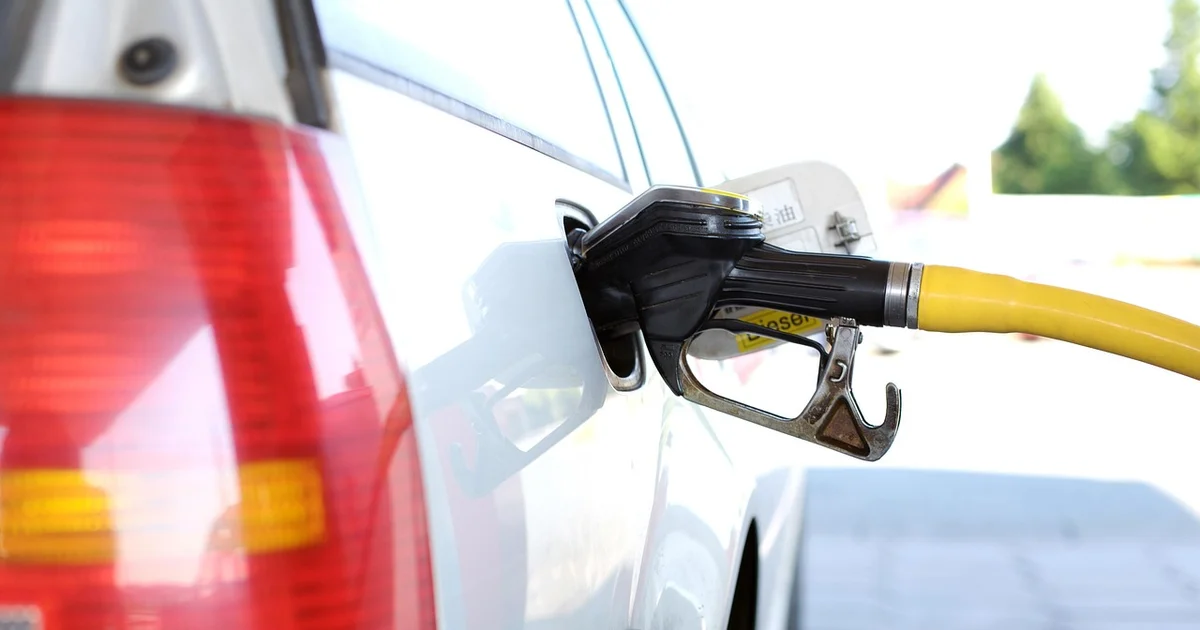
The national government of Argentina has decided to postpone once again the increase in fuel taxes until December 1, 2026. This delay affects taxes on unleaded gasoline and diesel, responding to updates that were not implemented in previous years.
The measure aims to stimulate economic growth through a sustainable fiscal approach, continuing a series of previous deferrals.
Generated by AI from the original story in Spanish.
El Gobierno nacional postergó un mes más la aplicación de los aumentos pendientes del impuesto a los combustibles líquidos y del impuesto al dióxido de carbono para la nafta sin plomo, la nafta virgen y el gasoil. Los incrementos, que debían empezar a regir el 1° de noviembre, se aplicarán desde el 1° de diciembre de 2026. Así lo dispuso el Decreto 1305/2026, publicado este viernes en el Boletín Oficial con las firmas del presidente Javier Milei, el jefe de Gabinete Diego Santilli y el ministro de Economía, Luis Caputo.
La norma modifica el Decreto 617/25, que había fijado un esquema de aplicación parcial de las subas. El período en que rigen los montos actuales, que se extendía entre el 1° de agosto y el 31 de octubre, ahora llegará hasta el 30 de noviembre. Recién a partir del mes siguiente se trasladarán los incrementos remanentes. Los aumentos postergados surgen de las actualizaciones correspondientes a 2024 y 2025, y al primer y segundo trimestre de 2026, que nunca se aplicaron por completo.
Según la Ley 23.966, los montos fijos de ambos tributos se actualizan cada trimestre por la inflación que mide el Instituto Nacional de Estadística y Censos (INDEC), y la Agencia de Recaudación y Control Aduanero (ARCA) se encarga de calcularlos en enero, abril, julio y octubre. La medida también alcanza al monto diferencial del impuesto para el gasoil que se consume en la Patagonia, que abarca las provincias de Neuquén, La Pampa, Río Negro, Chubut, Santa Cruz y Tierra del Fuego, el partido bonaerense de Patagones y el departamento mendocino de Malargüe.
En los considerandos, el Gobierno sostuvo que la decisión busca “continuar estimulando el crecimiento de la economía a través de un sendero fiscal sostenible”. La postergación se suma a una larga serie de decretos que vienen difiriendo las subas mes a mes, como los 699, 782, 840 y 929 de 2025, y los 74, 116, 217, 302, 405, 562, 693, 829 y 1126 de este año.
Original excerpt in Spanish. The content belongs to Ámbito.
Economy · Perfil