Who leads the conversation
Narratives
- Government
- 35%
- Left / opposition
- 50%
- The street
- 15%
Start free with El Resumen Esencial or go Premium for the full analysis. Newsletters are in Spanish.
Start free with El Resumen Esencial or go Premium for the full analysis. Newsletters are in Spanish.
Real pulse on X
The voices and keywords are in Spanish, as they appear in the sources.
Data gathered from public conversations and estimated by AI. Source: the story's context (no usable data from X).
Martín Lousteau, quoted by Derecha Diario1 min read
AI estimate · 80% confidence
Main framing
Left 70%
Mixed · estimated by AI · 80% confidence
The estimate comes from analyzing the story's text: which sources it quotes, which facts it highlights and what language it uses.
An AI model reads the story and estimates how much of its framing leans left, center or toward a libertarian view. The three percentages add up to 100.
This is an AI-generated estimate, not an objective judgment.
Generated on · 1 min read
AI summaries may contain errors.
Critiques from opposition figures like Martín Lousteau and Axel Kicillof emphasize a negative perspective on Milei's management, while the president's own self-criticisms suggest a more balanced reflection. Concerns about talent flight reinforce the criticism of his economic model.
Quoted from the original Spanish text.
AI summary
The economic management of President Javier Milei has sparked intense debate, with opposition criticism aimed at fiscal adjustments and subsidy removals. Milei has acknowledged mistakes in his administration and the economic challenges, while figures like Axel Kicillof and Sergio Massa have voiced concerns over the impact of these policies and the brain drain in the country.
Generated by AI from the original story in Spanish.
Recientemente, la gestión económica del presidente Javier Milei ha generado un intenso debate entre miembros del gobierno y la oposición. Martín Lousteau, desde la oposición, criticó el ajuste fiscal y la eliminación de subsidios, afirmando que bajo la dirección de Milei, "la Argentina no va a crecer hasta final del mandato". Su postura refleja una preocupación por las repercusiones que estas políticas tendrían en la economía nacional.
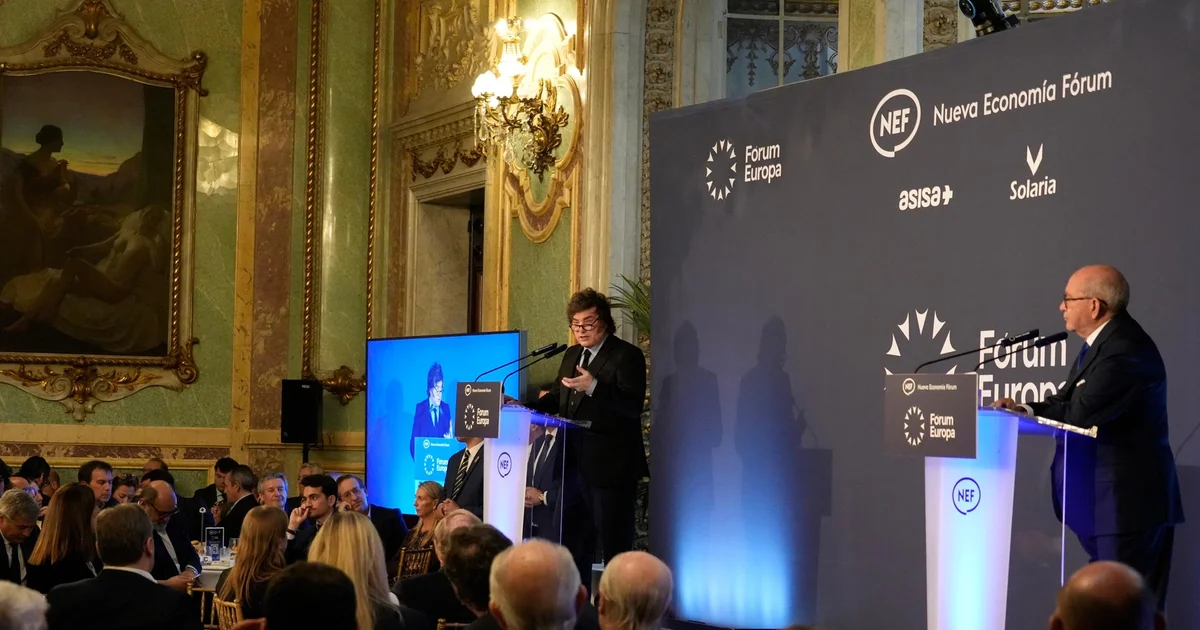
Por su parte, Javier Milei ha admitido en varias ocasiones errores en su gestión. En una entrevista en España, el presidente reconoció que "hay cosas que las podríamos haber hecho mejor o calculado mejor", y también que "los índices inflacionarios y la actividad económica del país no estarían evolucionando tan positivamente como esperábamos". Estas declaraciones parecen ser una respuesta directa a las críticas que recibe de la oposición.
El exministro Axel Kicillof también no escatimó en críticas, subrayando que el gobierno busca los votos para avanzar en la eliminación de las PASO, beneficiando así a Milei. Kicillof aseveró que la oposición no puede simplemente esperar a que "a Milei le vaya mal" y que es crucial coordinar esfuerzos entre dirigentes opositores para enfrentar un nuevo presupuesto marcado por el ajuste. Esto sugiere una estrategia más activa por parte de la oposición.
En este contexto, Sergio Massa también expresó su preocupación, centrando su crítica en la fuga de profesionales y la falta de recursos humanos capacitados, alarmándose por los "10 mil docentes y científicos que se fueron del país". Esta fuga de talento se considera un problema serio en el marco de una gestión que muchos han calificado de insostenible en su modelo económico.
Original excerpt in Spanish. The content belongs to Martín Lousteau, quoted by Derecha Diario.



Economy · Página/12