Start free with El Resumen Esencial or go Premium for the full analysis, in English, Spanish or Portuguese.
Start free with El Resumen Esencial or go Premium for the full analysis, in English, Spanish or Portuguese.
Start free with El Resumen Esencial or go Premium for the full analysis, in English, Spanish or Portuguese.
Gobierno de la Ciudad de Buenos Aires1 min read
AI estimate · 90% confidence
Main framing
Center 80%
Center · estimated by AI · 90% confidence
The estimate comes from analyzing the story's text: which sources it quotes, which facts it highlights and what language it uses.
An AI model reads the story and estimates how much of its framing leans left, center or toward a libertarian view. The three percentages add up to 100.
This is an AI-generated estimate, not an objective judgment.
Generated on · 1 min read
AI summaries may contain errors.
The article focuses on the advances of an institutional project and uses neutral language. Official voices, such as that of the Sports Secretary, are highlighted without questioning the process being undertaken.
AI summary
The start of the paving of the Buenos Aires racetrack marks a significant advance in its transformation to host Formula 1 competitions. Sports Secretary Fabián Turnes emphasized the importance of this project in returning the city to the center of global motorsport.
A total of 43,000 tons of asphalt will be used in three layers to ensure adequate infrastructure.
Generated by AI from the original story in Spanish.
“El comienzo del asfaltado de la pista es un hito fundamental en la transformación del Autódromo. Proyectamos que Buenos Aires volvería a estar en el centro del automovilismo mundial, con un circuito a la altura de los principales escenarios internacionales y una infraestructura que nos permita recibir competencias de primer nivel, y ésta etapa nos permite ver con más claridad lo cerca que estamos de lograrlo”, sostuvo el secretario de Deportes, Fabián “Chino” Turnes.
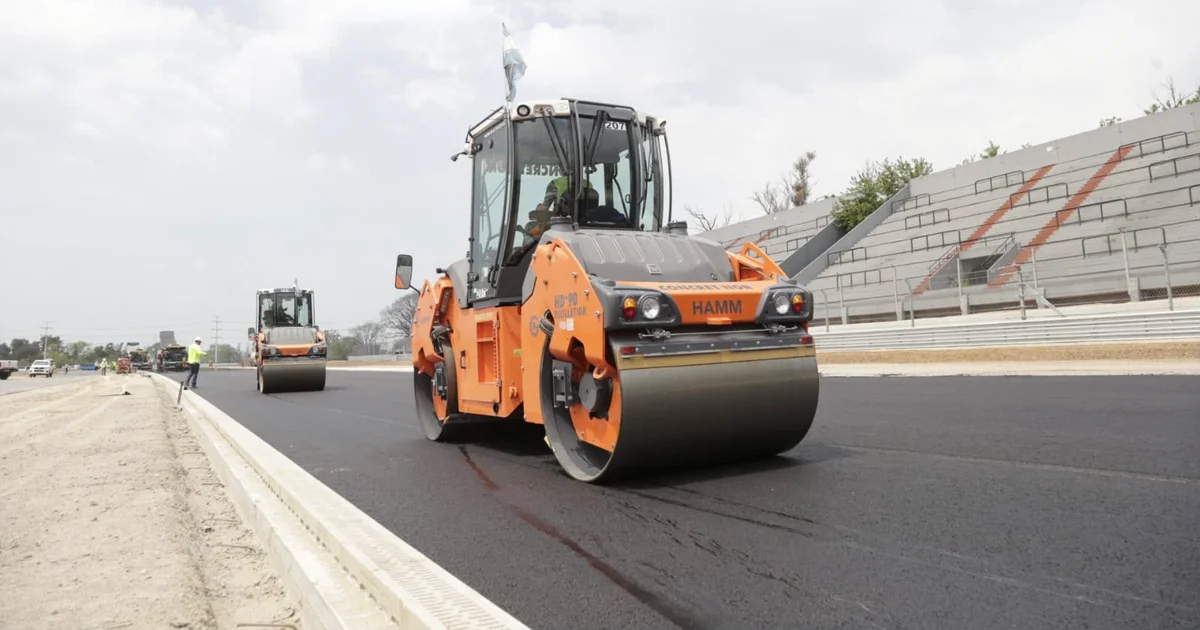
El asfaltado se está haciendo en forma coordinada con tres grupos de operarios que avanzan de manera simultánea, uno al lado del otro, para cubrir el ancho de la pista. Cada grupo está compuesto por un camión que transporta el asfalto caliente, una pavimentadora terminadora de asfalto y dos rodillos (tipo aplanadoras). De este modo, se alcanza un despliegue de 12 equipos de gran porte.
En total, se usarán 43.000 toneladas de asfalto, distribuidas en tres capas:
Primera capa (base): mezcla AM3 - AC19, de 8 centímetros de espesor (actualmente en ejecución).
Segunda capa (intermedia): mezcla AM3 - AC12, de 5 centímetros de espesor.
Tercera capa (rodamiento): mezcla HIMA - AC12, de 4 centímetros de espesor, que constituirá la superficie final sobre la que circularán los vehículos.
Original excerpt in Spanish. The content belongs to Gobierno de la Ciudad de Buenos Aires.