Who leads the conversation
Narratives
- Government
- 40%
- Left / opposition
- 30%
- The street
- 30%
Start free with El Resumen Esencial or go Premium for the full analysis. Newsletters are in Spanish.
Start free with El Resumen Esencial or go Premium for the full analysis. Newsletters are in Spanish.
Real pulse on X
The voices and keywords are in Spanish, as they appear in the sources.
Data gathered from public conversations and estimated by AI. Source: the story's context (no usable data from X).
iProfesional5 min read
AI estimate · 80% confidence
Main framing
Center 70%
Center · estimated by AI · 80% confidence
The estimate comes from analyzing the story's text: which sources it quotes, which facts it highlights and what language it uses.
An AI model reads the story and estimates how much of its framing leans left, center or toward a libertarian view. The three percentages add up to 100.
This is an AI-generated estimate, not an objective judgment.
Generated on · 1 min read
AI summaries may contain errors.
The article uses neutral language when describing the IMF's recommendations and focuses on economic data without an evident bias toward the left or the right. It mentions facts about the Argentine economy without subjective evaluations. Additionally, the presentation of data and statistics is highlighted in an objective manner.
AI summary
The International Monetary Fund (IMF) urged Argentina to continue reducing energy subsidies and downgraded its growth forecast for the country to 2.1% for 2026. Although acknowledging that this adjustment is complex, the IMF predicts a gradual economic recovery, expecting a 3.5% growth by 2027.
The report stresses the importance of aligning internal prices more closely with international values and suggests improving the effectiveness of assistance mechanisms.
Generated by AI from the original story in Spanish.
El Fondo Monetario Internacional (FMI) pidió a los países de América Latina preservar los avances en la reducción de los subsidios energéticos y mencionó a la Argentina entre las economías que avanzaron en esa dirección.
Al mismo tiempo, el organismo redujo su proyección de crecimiento para el país al 2,1% en 2026, aunque prevé una recuperación al 3,5% en 2027.
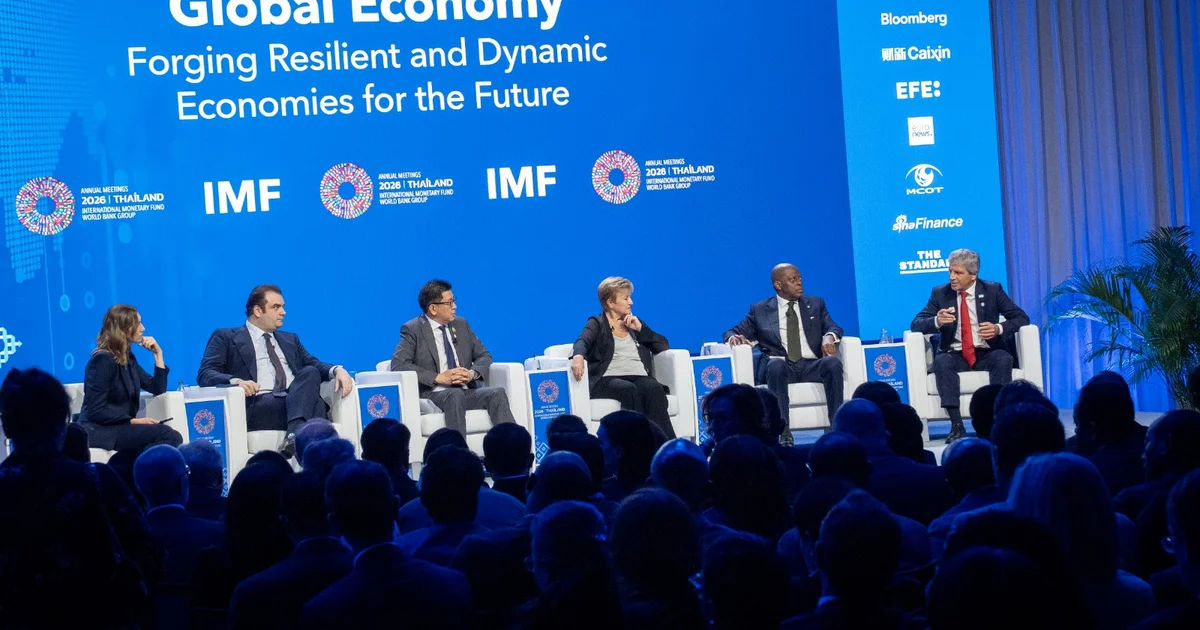
El planteo sobre los subsidios forma parte del informe Perspectivas Económicas para el Hemisferio Occidental, presentado durante la Asamblea Anual del FMI en Bangkok, Tailandia. El documento advierte que las medidas generalizadas para amortiguar el aumento de los precios internacionales de la energía pueden distorsionar el funcionamiento de los mercados y desalentar el ahorro energético.
"Debe preservarse el difícilmente logrado avance alcanzado en varios países, incluidos Argentina, Bolivia y Ecuador, en cuanto a la reducción o eliminación de los subsidios a la energía", sostuvo el organismo.
Qué dijo el FMI sobre los subsidios energéticos
El Fondo señaló que durante 2026 numerosos gobiernos implementaron medidas para reducir el impacto del encarecimiento de la energía sobre los hogares y las empresas. Entre ellas, mencionó:
Original excerpt in Spanish. The content belongs to iProfesional.

Investments · La Nación

Finance · El Cronista