Who leads the conversation
Narratives
- Government
- 65%
- Left / opposition
- 15%
- The street
- 20%
Start free with El Resumen Esencial or go Premium for the full analysis. Newsletters are in Spanish.
Start free with El Resumen Esencial or go Premium for the full analysis. Newsletters are in Spanish.
Real pulse on X
The voices and keywords are in Spanish, as they appear in the sources.
Data gathered from public conversations and estimated by AI. Source: the story's context (no usable data from X).
Perfil3 min read

AI estimate · 80% confidence
Main framing
Left 60%
Left · estimated by AI · 80% confidence
The estimate comes from analyzing the story's text: which sources it quotes, which facts it highlights and what language it uses.
An AI model reads the story and estimates how much of its framing leans left, center or toward a libertarian view. The three percentages add up to 100.
This is an AI-generated estimate, not an objective judgment.
Generated on · 1 min read
AI summaries may contain errors.
The article presents a defense of the economic management without a strong ideological bias, highlighting specific measures and achievements of the current government. It also uses technical language and presents arguments that could be relevant to different political groups.
Quoted from the original Spanish text.
AI summary
During the Annual Meetings of the IMF and the World Bank, Minister of Economy Luis Caputo defended Javier Milei's government, highlighting a surplus of dollars thanks to investments under the Large Investment Incentive Regime (RIGI). Caputo stated that the administration achieved fiscal balance and reduced public spending by 30% in real terms.
Despite challenges accessing dollar financing, the minister claimed that macroeconomic stability is essential for sustained growth in the country.
Generated by AI from the original story in Spanish.
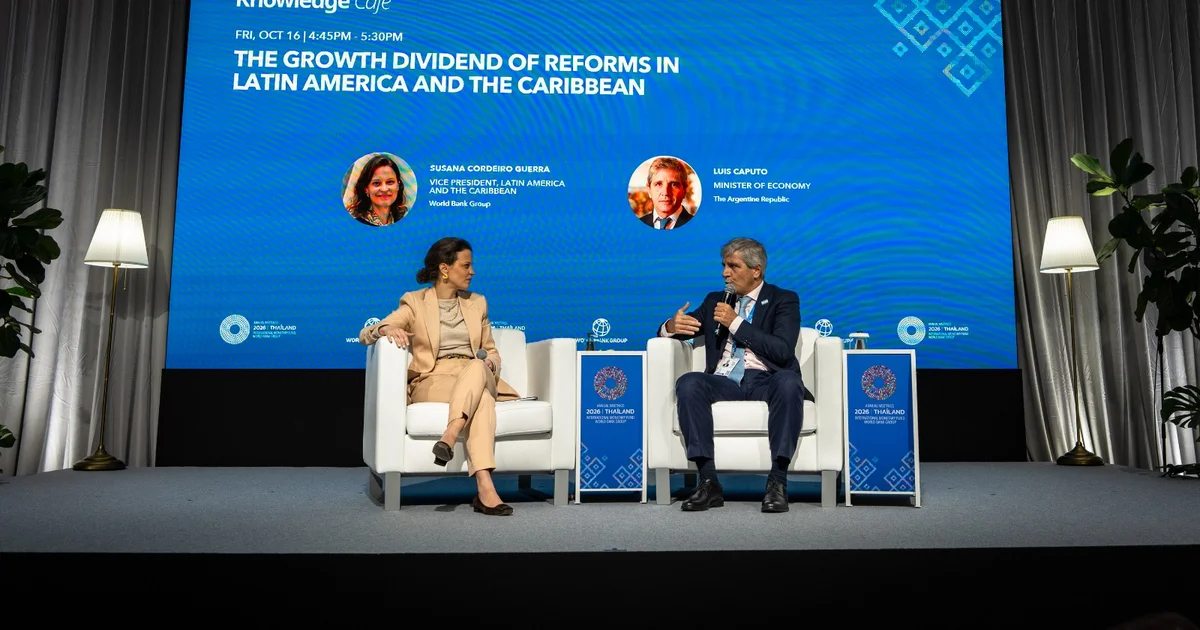
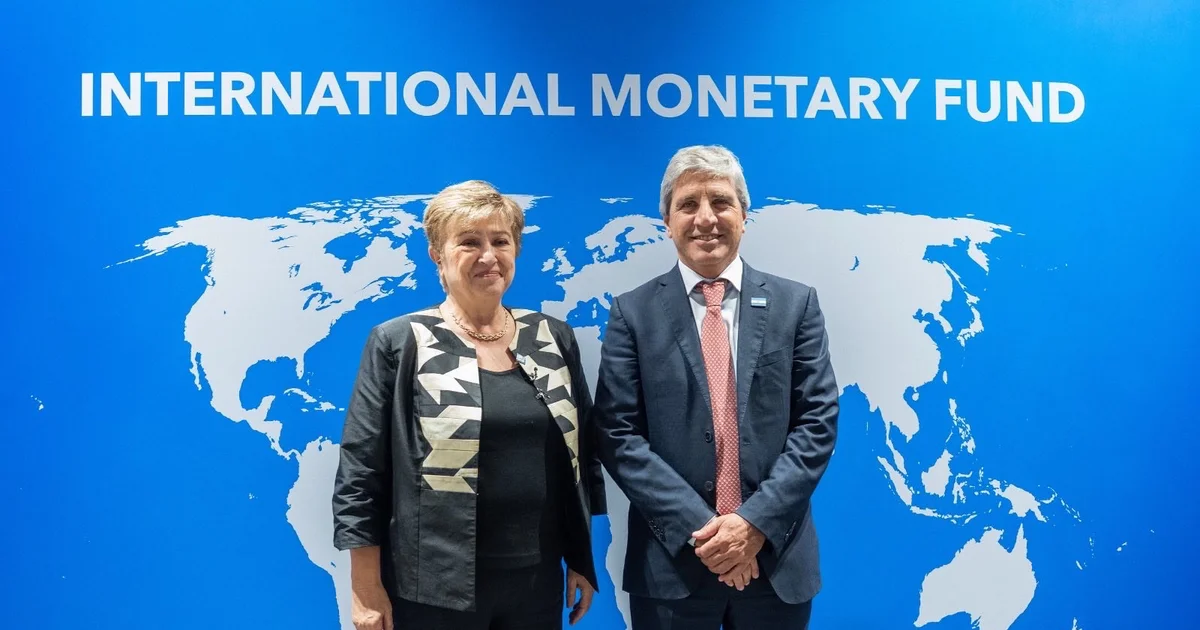
Durante su participación en las Reuniones Anuales del FMI y el Banco Mundial en Tailandia, el ministro de Economía, Luis Caputo, defendió el rumbo de la gestión actual. El funcionario de Javier Milei afirmó que las divisas generadas por el Régimen de Incentivo para Grandes Inversiones (RIGI) permitirán levantar las restricciones cambiarias pendientes.
En un panel junto a Susana Cordeiro Guerra, vicepresidenta del Banco Mundial para América Latina y el Cariba, el funcionario aseguró que Argentina tiene un "excedente de dólares", capitalizado mediante compras diarias del Banco Central, y que la administración de Milei se encargó de "la peor herencia económica de la historia sin incumplir ningún contrato y respetando la propiedad privada".
Caputo necesita US$ 5 mil millones adicionales para poder afrontar los vencimientos de 2027
Respecto a las reservas, el titular de Hacienda indicó que el programa RIGI cuenta con inversiones aprobadas por 50.000 millones de dólares y otros 160.000 millones en evaluación. Aseguró además que el Banco Central mantiene un ritmo de compras superior a los 100 millones de dólares diarios.
"Eso ya representa una cantidad de dólares suficiente para que podamos levantar las restricciones cambiarias, ahora todos los que quieran ahorrar en dólares pueden hacerlo y las empresas pueden importar sin tener que recurrir a un funcionario público que les pida un favor", profundizó.
El titular de la cartera de Economía aseguró que el país actualmente cuenta con un "excedente de dólares" y amplió: "Solamente este año se compraron cerca de 16.000 millones de dólares y, gracias a todo esto, estamos en una situación mucho más estable".
Original excerpt in Spanish. The content belongs to Perfil.
Institutional · Ministerio de Economía

Politics · La Nación